


A quiet transformation is under way in how architects and developers think about glass. Smart Glass Tech, the North American manufacturer behind the PriWatt range of switchable privacy glass, is positioning itself at the centre of what it sees as a structural shift away from blinds, curtains and partitioned walls.
PriWatt’s core product relies on polymer-dispersed liquid crystal (PDLC) technology, a category that has been developed commercially over the past three decades. When an electrical current is applied, liquid crystal molecules align and allow light to pass through, rendering the panel transparent. Cut the power, and the crystals scatter randomly, turning the glass opaque.
The system draws fewer than five watts per square metre and operates at between 48 and 55 volts AC, figures the company says make it competitive with conventional window treatments on running costs. PriWatt also offers a reverse variant using PNLC technology, which defaults to clear without power and switches to privacy only when activated, reducing the energy load further.
The addressable market is broad. Healthcare has emerged as a particularly active vertical, with installations completed at Mount Sinai Kravis Children’s Hospital in New York, Toronto North York Hospital in Canada, and the Moffitt Cancer Center in Florida. Switchable glass allows staff to observe patients without entering a room, reducing the risk of cross-contamination from pathogens such as MRSA, while also cutting noise levels in clinical environments.
Beyond hospitals, the company is targeting offices, residential developments, hospitality and retail. The glass can replace load-bearing partitions with thinner panels, and its surface can double as a rear-projection screen for presentations.
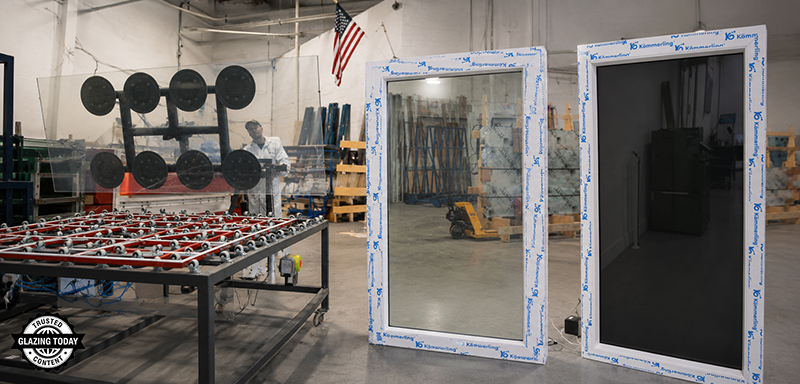
Now PriWatt is turning its attention to the residential window market through a collaboration with Kömmerling USA, the Huntsville, Alabama-based manufacturer of PVC-U window and door systems known for their thermal insulation, durability and weather resistance. The partnership integrates PriWatt’s DLC (Dye Liquid Crystal) technology directly into Kömmerling’s PVC-U window frames, a format designed for straightforward installation in both new-build homes and retrofit projects. DLC was originally developed for transportation applications where optical reliability under demanding conditions was essential, and its application in a domestic window unit represents a notable step towards making switchable glass a mainstream residential product rather than a commercial or institutional one. The result is a window that can shift from clear to private at a touch, eliminating the need for blinds or curtains while retaining the clean sight lines that contemporary housebuilders favour.

Smart Glass Tech says its installation teams have fitted more than 100,000 square feet of PriWatt products across the United States and Canada, and the product line is certified to SGCC standards with ballistic configurations available for higher-security applications.
Anton Yerkeyev, founder of the parent company Smart Glass Group, frames the product in expansive terms, arguing that privacy is being “reshaped” as a feature of the built environment rather than something bolted on afterwards. Whether that vision translates into the kind of scale required to move the wider glazing industry will depend on whether developers and homeowners are willing to absorb the premium that smart glass still commands over conventional alternatives.
Why This Matters: Smart glass and switchable glass is a product consumers and building owners desire. However, there have been several barriers to its success in the mainstream markets. Cost and reliability are two of the most mentioned issues. PriWatt is ironing these out and with the tie-up with Kommerling its interesting to see smart glass being used in a PVC-U frame that is common place in many UK residential homes. The pressure is on for suppliers to deliver this product to trade markets so installers can start selling this product to homeowners at a realistic price point.