
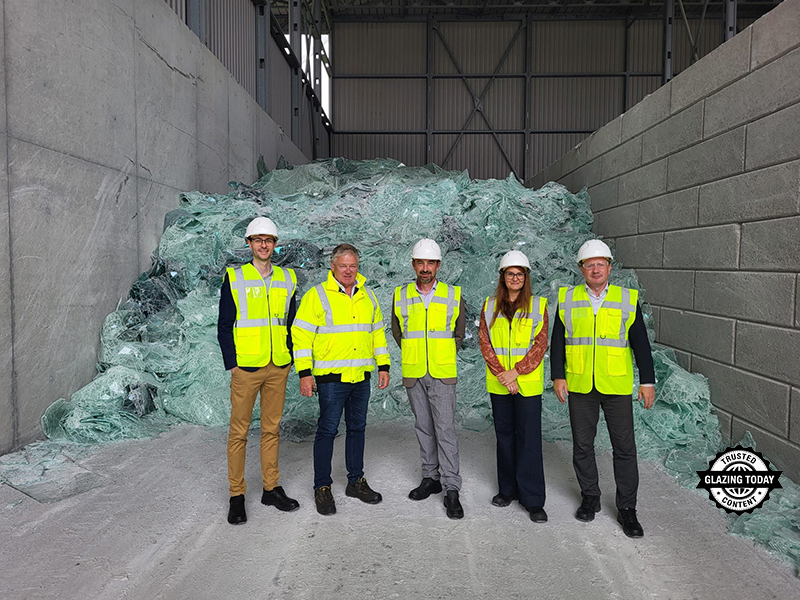


A team from Glass for Europe has visited the GRL Glass Recycling & Logistics plant to examine the opportunities and practical challenges surrounding closed-loop recycling in the flat glass sector.
The visit, organised by the European Federation of Glass Recyclers, gave the Glass for Europe delegation an opportunity to see how post-consumer flat glass is collected, sorted and prepared for reuse in manufacturing. FERVER’s secretary general and president also shared their expertise on the operational and policy changes needed to improve recovery rates.
Only 5 per cent of post-consumer flat glass is currently recycled, leaving significant scope to increase the supply of high-quality cullet. However, the material must remain clean and uncontaminated throughout dismantling, sorting and transportation if it is to be returned to the manufacturing batch.
Properly treated recycled flat glass can reduce both the energy required during production and the carbon dioxide emissions associated with manufacturing new glass.
Glass for Europe said the forthcoming Circular Economy Act represented an important opportunity to strengthen glass circularity. Priorities include pre-demolition audits to identify the quantity and quality of recoverable flat glass, with similar measures potentially extended to major renovation and refurbishment projects.
The industry is also seeking tighter restrictions on landfilling recyclable flat glass and more efficient transport rules for pre-consumer cullet granted by-product status.

Achieving wider circularity will require closer co-operation across demolition, construction, logistics, recycling and manufacturing. Glass for Europe said visits of this kind could support knowledge sharing and help make closed-loop flat glass recycling standard practice across the industry.
Why This Matters: The visit underlines the scale of the flat glass industry’s circularity challenge. Recycling just 5 per cent of post-consumer glass represents both an environmental failure and a substantial commercial opportunity. Greater recovery of clean cullet could cut furnace energy use, emissions and reliance on virgin raw materials. However, success depends on better demolition practices, tighter landfill rules and coordinated logistics. The sector now needs policy support and investment to turn closed-loop recycling into routine practice.