
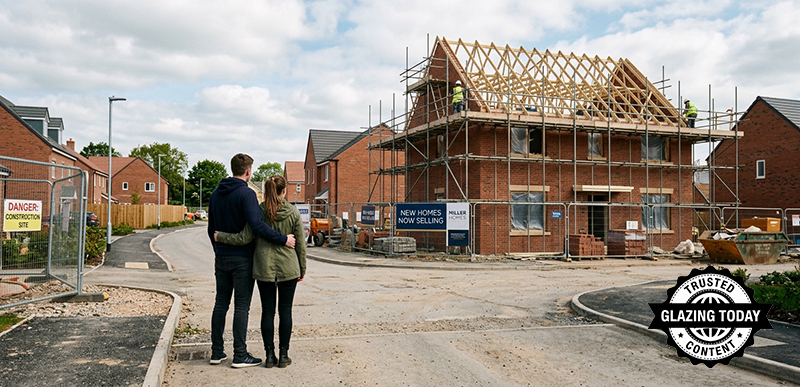

The first sign of how British housebuilding is faring rarely comes from the official statistics. It shows up months earlier in the order books of window and door fabricators, and for much of this year the orders for frames and sealed units have told an uncomfortable story.
The prime minister’s answer, announced on the eve of Labour’s conference in Liverpool, does little to change it. Andy Burnham’s Your First Home scheme will let first-time buyers in England buy a new-build property with a 2.5% deposit, backed by a government equity loan worth 20% of the price and interest-free for an initial period.
The aim is a decent one. Burnham says the scheme is for people who do not have the “bank of mum and dad” behind them. But it is a demand-side measure of a very familiar kind, and it arrives at a moment when the problem is supply.
The chancellor, John Healey, is expected to set out the detail in next month’s budget. In doing so he will be pouring fresh demand into a market where building has stalled. Annual completions in England are running at about 204,500, well short of what the government needs. Planning consents are falling and several of the biggest housebuilders have cut their delivery forecasts. The housing secretary, Angela Rayner, has already conceded there is only a “slim chance” of meeting Labour’s target of 1.5m homes by the next election.
The bigger flaw is that the scheme does nothing about costs. Builders’ margins are being squeezed by higher construction and materials prices, and more is on the way. The Future Homes Standard, which becomes mandatory in late 2027, is expected to add between 4% and 8% to the cost of building each new home. The window industry backs tougher energy performance rules, but meeting them means triple glazing, better insulation and heat pumps, and all of that has to be paid for upfront. Small and independent builders, who have little leverage over global supply chains, will feel it most.
Rather than easing that pressure, the government is adding to it. A new building safety levy comes into force next month, and the cost of running Your First Home will be met by a compulsory fee on developers linked to property values. Analysts expect both to end up in higher asking prices.

Then there is the question of what happens to the buyers themselves. With mortgage rates rising, a 2.5% deposit leaves households carrying heavy debt and with almost no cushion if prices fall. Critics have warned that lending buyers more without building more homes simply pushes up prices and leaves those buyers exposed. The Conservatives’ Katie Lam was blunter, accusing Labour of asking first-time buyers to take on more debt to afford “the few homes that have been built”.
Ministers have identified the right problem but reached for the wrong fix. State-backed loans on homes that are becoming ever more expensive to build will not solve the housing crisis. Until the government gets to grips with supply chain inflation, slow planning and the cost of essential components such as windows and doors, first-time buyers are simply being offered cheaper access to homes that are not being built.