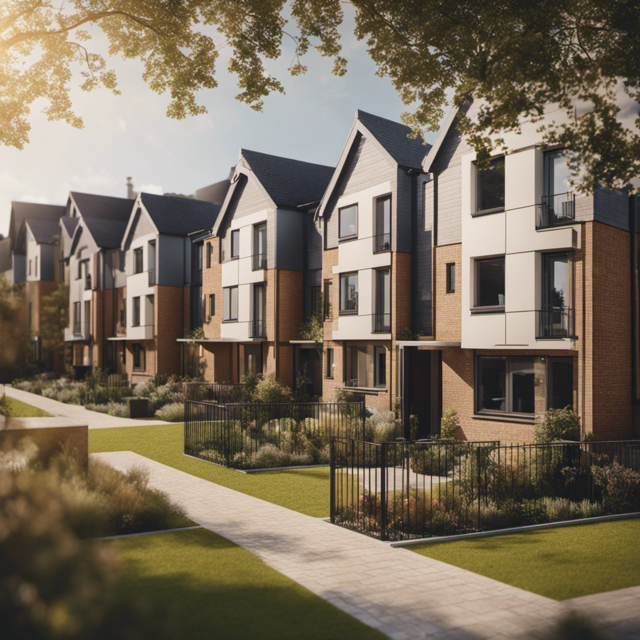

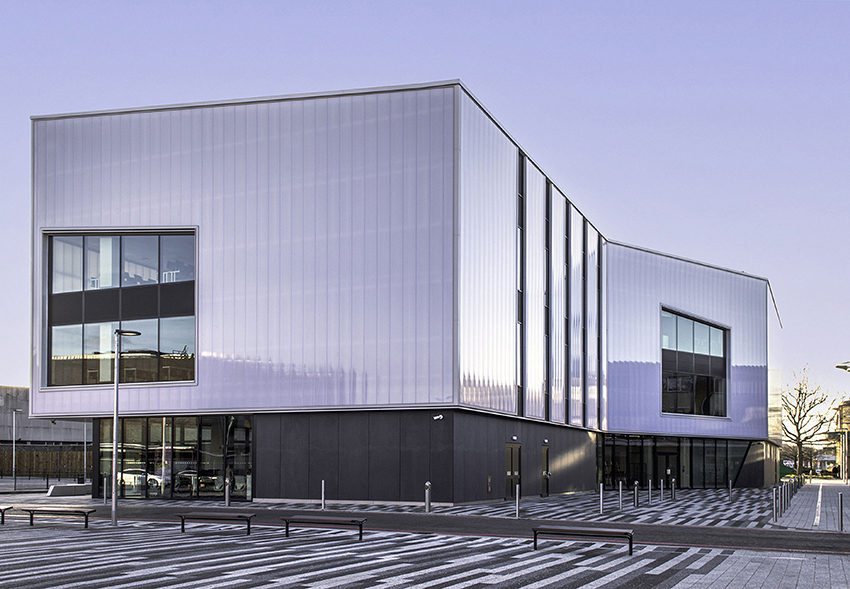


Low dead weight and effective thermal insulation: These two advantages are what make Rodeca’s translucent building elements stand out. The products have a multi-layer structure and thus enhance energy efficiency. As the panels are made of polycarbonate, they are also particularly lightweight. As a result, the façade and roof elements are especially suitable for redevelopment measures – even those of a complex nature. The low weight helps prevent any problems with the statics. At the same time, the elements enhance the building envelope in terms of energetic performance and appearance.
Designing energy-efficient buildings reduces both environmental impact and energy costs. Appropriately planned, the building envelope can, therefore, help reduce the amount of energy needed for heating and cooling. At the same time, lightweight and slender constructions are in demand – especially when it comes to redevelopment measures. Rodeca’s translucent building elements achieve this particular symbiosis. With their multi-layer structure, they have good thermal insulation values. The building elements are made of thermoplastic polycarbonate and have a co-extruded UV-protection layer. Due to their long service life and durability, the panels are particularly suitable as façade and roof elements for modern industrial and commercial buildings.
Effective insulation due to structure and material
Rodeca’s translucent building elements are composed of several layers which form air chambers. The latter serve as multi-level insulation layers and reduce heat transmission. Different versions are available depending on specific requirements and energy demand – from panels with four to twelve layers. This multi-layer structure minimises heat transfer through the façade. In addition, polycarbonate is a plastic with low thermal conductivity by nature – compared to other materials such as glass or metal. In a vertical installation situation, the 60 mm thick translucent building elements achieve a heat transmission coefficient of U = 0.75 watts per square metre and Kelvin. As a result, heat loss is reduced, which contributes to a pleasant indoor climate.
Furthermore, the translucent building elements generate less compressive and tensile stress on the surrounding materials. The polycarbonate panels and their aluminium frame system are significantly lighter in weight than other conventional façade components. As a result, the lightweight plastic panels are easy to handle and install. The installation also requires less effort and resources, which results in time and cost savings. Problems with building statics are also counteracted this way.
Energy-efficient and load-bearing structure

In addition, the translucent building elements can also be used in conjunction with Rodeca’s thermally broken aluminium framing systems. That reduces both heat loss in the building in winter and heat transfer from the outside to the inside in summer. In addition, aluminium is – similar to polycarbonate – very lightweight compared to other building materials while maintaining the same strength and stability. That is beneficial for a variety of buildings and for redevelopment projects in particular. Due to the fact that the span widths of the panels can be determined individually for the project, there is often significant potential when it comes to savings in the supporting structure. With Rodeca’s façade systems, it is possible to glaze large areas so that the exterior looks almost seamless. The material usage reduction makes them a stable, particularly lightweight and comparatively cost-effective solution for energy-efficient façade construction.
What’s more, Rodeca panels are translucent and allow glare-free daylight into the building. With a light transmission value of 48 per cent, for example, natural light can be used optimally in the interior. As a result, there is a reduced need for artificial lighting and energy, which is another way these polycarbonate panels contribute to resource-conserving construction design.