

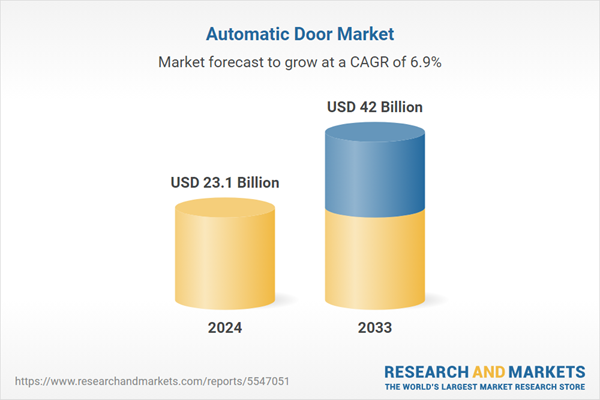

The global automatic door market is poised for substantial growth over the next decade, with a projected valuation of USD 42bn (£33bn) by 2033—up from USD 23.1bn in 2024—according to new industry forecasts. This reflects a compound annual growth rate (CAGR) of 6.55% from 2025 through 2033.
Driven by mounting demand across commercial, industrial and residential sectors, automatic doors are increasingly favoured for their touch-free operation, energy efficiency, and accessibility features. The technology, which activates through sound, light, pressure, or motion sensors, is now standard in settings ranging from hospitals and airports to supermarkets and train stations.
The construction boom in emerging and mature economies alike continues to fuel market expansion. Crucially, automatic doors have become a central accessibility tool for inclusive infrastructure, offering secure and convenient passage for elderly and differently-abled individuals. Their rising integration in public and defence facilities further underscores their role in enhancing safety and operational efficiency.
The pandemic has had a lasting impact on consumer behaviour and facility design, reinforcing the need for contactless entry systems. “COVID-19 accelerated the adoption of automatic doors as part of broader hygiene strategies in public buildings,” said Dr. Elaine Murray, a built environment consultant. “It’s now considered a baseline expectation in many high-traffic locations.”
However, pandemic-related supply chain disruptions and construction slowdowns temporarily stunted market performance. Analysts expect the sector to rebound as global infrastructure projects resume and demand for smart building technologies climbs.
To differentiate in a competitive market, key manufacturers are innovating beyond the door itself, integrating features such as bollards, boom barriers, and advanced locking systems. These enhancements reflect broader trends in smart security and building automation.

As regulatory focus sharpens on accessibility and energy efficiency, automatic doors are set to become an even more integral component of future-proof building design. For suppliers and contractors in the fenestration and access control sectors, the growth trajectory presents both a challenge and a significant opportunity.