

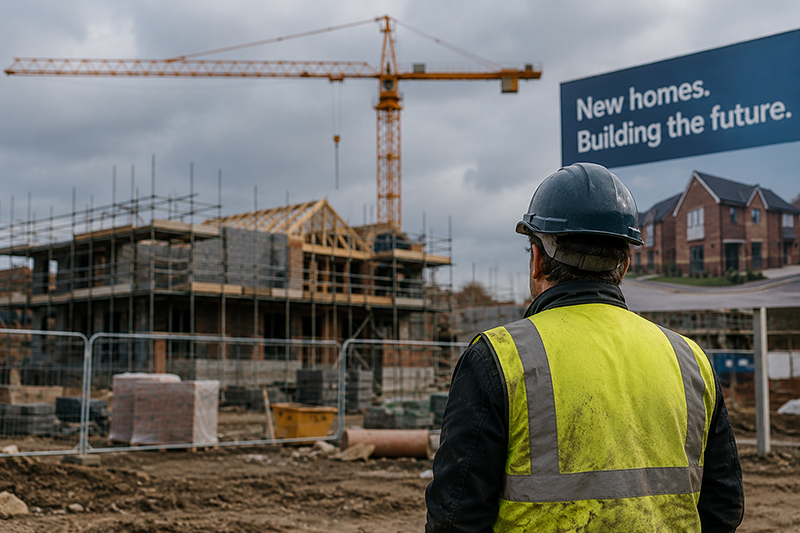

There were 2.07 million people employed in UK construction in the first quarter of 2026, according to the ONS. That was 0.6% higher than in the previous quarter, but still 3.4% lower than a year earlier. More tellingly, employment remained 14.5% below the recent peak seen in the first quarter of 2019 and was still at its lowest level since 2001.
The marginal quarterly rise should not be mistaken for a recovery. Construction employment remained subdued and was still lower than a year ago, reflecting downturns in housing new build and rm&i, the two largest sectors of the industry. And this is before the full effects of the Middle East conflict on construction demand and costs are felt in the second half of 2026.
Employment is likely to rise again in the second quarter, though that may say more about the weather than the strength of the sector. Better conditions should allow work delayed by rain-affected January and February to take place between March and May. Site activity in the second quarter will also still come before the full impacts of the Middle East conflict are felt through higher mortgage rates and financing costs, weaker confidence among homebuyers, homeowners, developers and investors, and double-digit rises in construction product prices during the second half of 2026 and the first half of 2027.
Together, these pressures are likely to mean further falls in UK construction employment over the next 18 months.
The wages picture is no more reassuring. Total construction pay, including bonuses, was 3.1% lower in March 2026 than a year earlier. Construction pay has now been falling on an annual basis for three consecutive months.
The bigger concern is what is happening in real terms. After stripping out inflation, UK construction wages in March were 6.2% lower than a year earlier. That was before the Middle East conflict feeds through into a spike in CPI inflation in the UK economy in the second half of 2026 and the first half of 2027, which is likely to mean even sharper falls in real construction wages over the next 12 to 18 months.

The wider problem is that house building, rm&i and construction employment have been subdued for so long that many of the tradespeople made unemployed over the past three years have moved to other industries or to other countries, where activity is less volatile and job security is stronger. They will not be coming back, even when construction wages eventually recover. They have been burnt by the industry.
As I have repeatedly highlighted, construction is not only losing people. It is losing knowledge and experience.
That has serious implications for any eventual recovery. When house building, rm&i and other key construction sectors finally begin to recover, the workforce will not be there in sufficient numbers. Labour rates will rise sharply as a result.
Even returning to the levels of house building seen in 2021 and 2022 will therefore be extremely difficult. Meeting the government’s new homes targets, as well as its plans for more than £700,000 million in new infrastructure, will be harder still.