
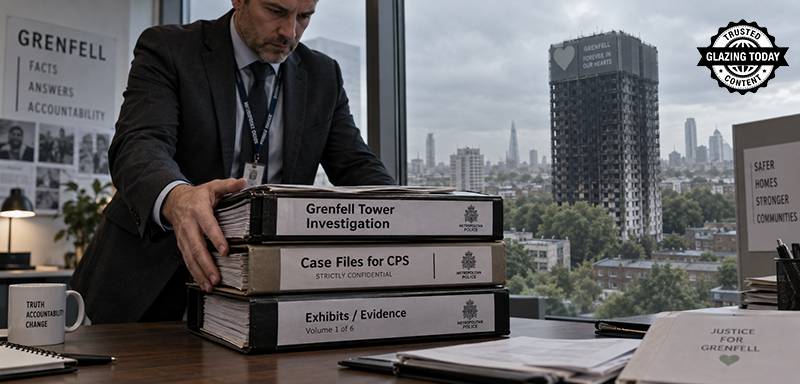


Detectives investigating the Grenfell Tower fire will begin handing case files to the Crown Prosecution Service by the end of September, the Metropolitan Police has confirmed, in a development that could finally bring criminal charges over the disaster that killed 72 people in June 2017.
Operation Northleigh, the £150m investigation described by the force as the largest and most complex in its history, has examined the conduct of around 15,000 people across 700 organisations. Officers are considering offences including corporate manslaughter, gross negligence manslaughter, fraud, misconduct in public office and breaches of health and safety law. Up to 57 individuals and 20 organisations could face prosecution. A charging decision is expected by June 2027 – ten years after the fire – with any criminal trial unlikely to begin before 2029.
Among the organisations that have faced scrutiny since the public inquiry’s final report are the cladding manufacturer Arconic, insulation makers Celotex and Kingspan, cladding contractor Harley Facades, main contractor Rydon Maintenance, fire engineer Exova and architects Studio E. The inquiry chair, Sir Martin Moore-Bick, found that Arconic, Celotex and Kingspan had engaged in “deliberate and sustained strategies” to manipulate fire-testing data and mislead the market about the safety of their products.
Grenfell United, the campaign group representing survivors and bereaved families, gave the update a cautious welcome. “We have waited almost a decade for accountability,” the group said, adding that any further delay to justice “would be unacceptable”.
For the wider construction and glazing supply chain, the case is a reminder that the manipulation of fire-test evidence, not just the choice of material, sat at the heart of the tragedy. That scrutiny has already reached beyond cladding: an Office for Product Safety and Standards inspection this year found that every heat-soaked toughened glass unit it examined failed compliance checks, with most manufacturers unable to produce a legally required Declaration of Performance. Industry bodies have since urged glazing manufacturers and fabricators to review their own testing and documentation before regulators intervene.
Why This Matters: Operation Northleigh shows regulators are now willing to pursue companies, not just individuals, over falsified fire-safety data. Facade and glazing manufacturers supplying fire-rated systems should expect closer scrutiny of test evidence and Declarations of Performance. The lesson from Grenfell is that documentation gaps, once dismissed as administrative, can become the basis for corporate prosecution.