


News
NEWS: Glass Futures and VEC push towards lower-carbon production pathways

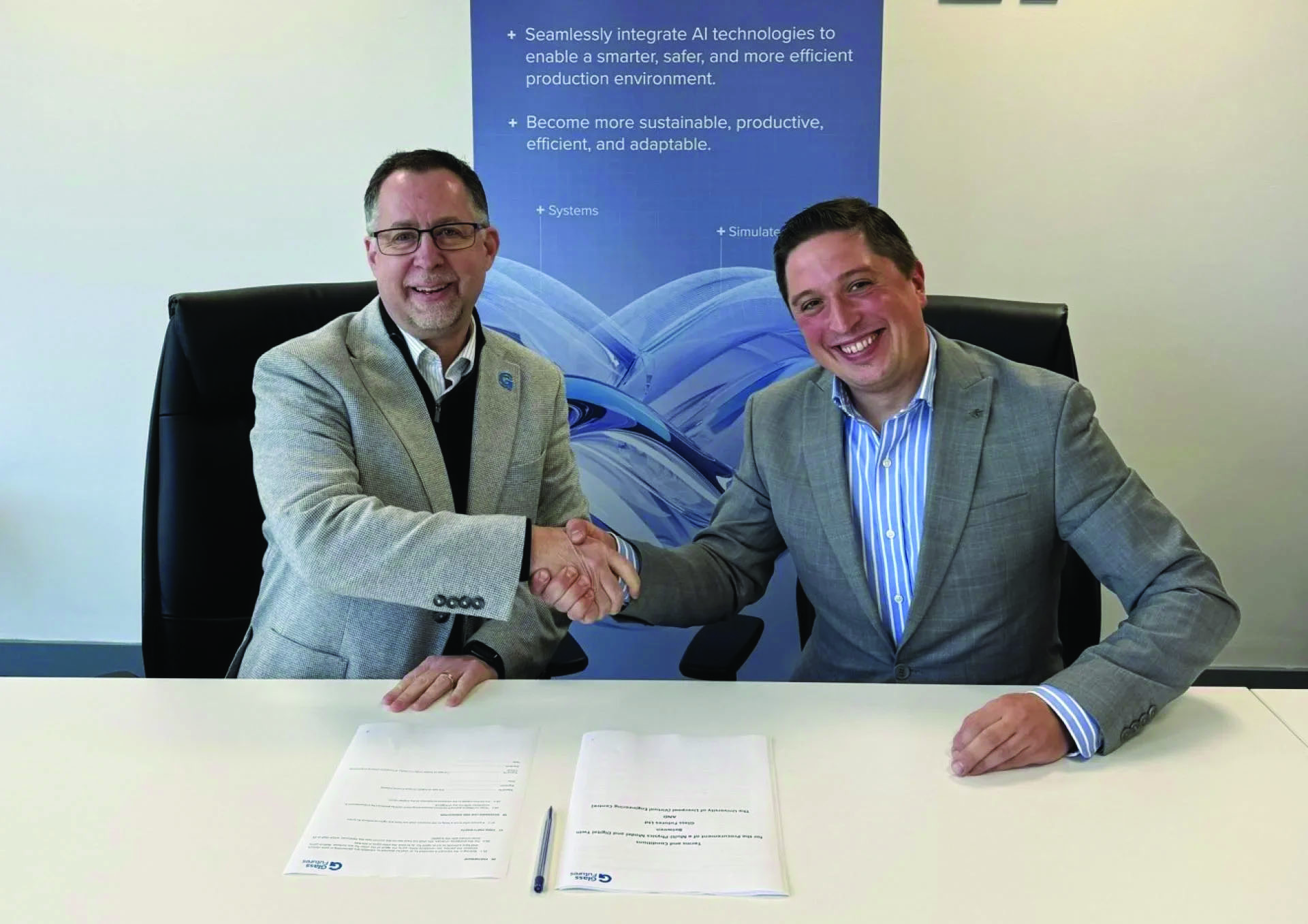

Glass Futures and the University of Liverpool’s Virtual Engineering Centre have begun a joint effort aimed at speeding progress toward lower-carbon manufacturing across the glass sector. The initiative, known as AI Glass, forms part of a £1.5 million UKRI-funded programme and is intended to help producers test new fuels, refine material choices and raise operational performance without interrupting day-to-day output.
The work is based at Glass Futures’ 165,000-square-foot Global Centre of Excellence in St Helens, where the organisation’s pilot furnace and research facilities serve as the foundation for a detailed virtual model of the full production cycle. The team plans to combine physics-based modelling with artificial intelligence to create a replica that allows partners to trial process adjustments in a controlled digital setting before committing resources on the factory floor.
A site-wide 3D digital twin, constructed from BIM data, LiDAR scans and UAV imagery, extends the concept to the entire complex. The model is intended to give engineers and researchers a clearer view of how equipment, energy use and material flows interact across the operation.
Dr. Konstantin Vikhorev, chief technology officer at the VEC, said the approach will allow manufacturers to test a wide range of choices at speed, reducing uncertainty around fuel shifts and material substitutions. He noted that the digital environment is designed to shorten decision cycles while supporting efforts to cut emissions and refine production quality.
Justin Kelly, chief executive of Glass Futures, said the project reflects how joint work between research institutions and industry can support firms facing rising energy demands and tightening climate commitments. By combining digital modelling with AI-based analysis, he said, partners gain a controlled space to study process changes, reduce exposure to costly trial-and-error and pursue lower-carbon operations without sacrificing performance.
For Glass Futures, the initiative strengthens the role of its St Helens centre as a testbed for manufacturing research. For participating companies, it offers a structured path to examine options that might otherwise require lengthy physical trials—an approach the partners expect to broaden as the programme advances.
Why This Matters: This project marks a meaningful shift for UK glass production. By giving manufacturers a controlled digital space to test fuel and material changes, it reduces uncertainty around major investment decisions. In a sector under pressure to cut emissions while protecting quality, it provides a practical route toward cleaner, more reliable production methods. The concept of creating a ‘Digital Twin’ follows a path being taken by many in the manufacturing sector as it allows companies to test models and analyse differing outcomes.