

A leading machinery supplier has warned that inadequate training of machine operators could be costing manufacturers more than they realise in product quality, safety, and staff retention. Emmegi (UK), a supplier of CNC and saw machinery to the aluminium fabrication industry, says that a failure to invest in comprehensive operator training can lead to repeat errors, increased downtime and higher maintenance costs.
Wayne Hunter, Operations Manager at Emmegi (UK), said: “An untrained operator who makes the same mistake over and over again can end up costing the business a lot more than the training would have cost in the first place.”
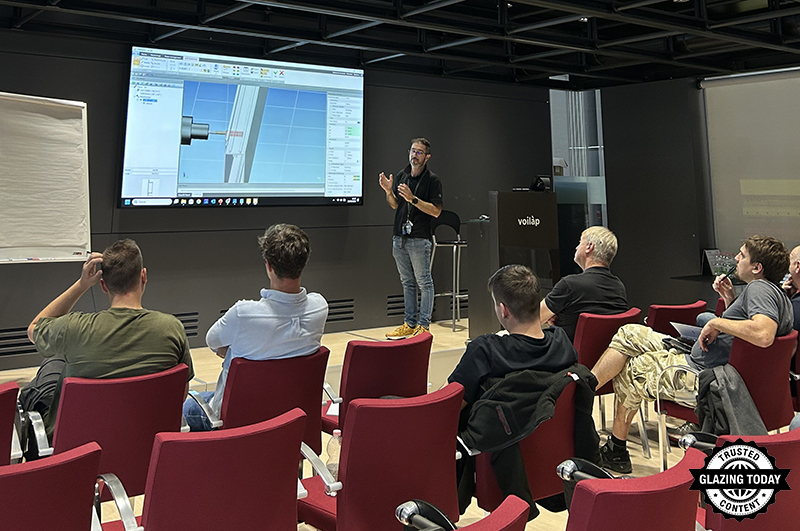
The company sends all its engineers from the UK and Ireland to its headquarters in Italy for advanced training at the Voilap Academy. This, it says, ensures its team remains up to date with the latest machine developments and can share best practice with customers.
Hunter stressed that the benefits of training extend well beyond machine performance. Properly trained operators, he said, take greater responsibility for the equipment, show more engagement in their role and contribute to a more stable workforce.
“Well trained operators make a massive contribution to product quality, output and reliability,” he said. “If it helps them to feel valued and rewarded as well, the result can even be a more stable workforce with lower recruitment costs.”

He warned against relying on informal methods of passing on knowledge among staff, arguing that these can lead to errors and inefficiencies. “It is far better to come to the machinery supplier direct for training rather than relying on Chinese whispers between your team,” he added.
According to Emmegi, one of the most common operator errors on CNC machines is allowing the equipment to fall out of tolerance, leading to component collisions. These, it says, can weaken parts and lead to machine failure.
Emmegi’s training begins with a focus on safety protocols, including emergency stop and restart procedures. It also covers machine controls, software functions, tool changes, and basic maintenance.
But the company believes the real value lies in more advanced understanding, enabling operators to troubleshoot alarms, optimise machine performance, and reduce unnecessary tooling costs.
Training is offered to all users of Emmegi machines, whether bought new or second-hand, and can be provided at any point in the equipment’s lifecycle.
“The reality is,” said Hunter, “that you might be risking the safety of your team if they lack real understanding of the machine, but you’re almost certainly compromising on your product quality and even losing money on remakes and downtime.”
He added: “It makes good commercial sense to maximise your investment by ensuring operators have real knowledge and understanding to use the machine to its full capability.”
Why This Matters: Wayne and Emmegi highlight a central challenge in modern manufacturing: the safe, consistent operation of precision machinery depends as much on workforce capability as it does on the equipment itself. Their point also prompts a wider question — whether firms can continue to rely on human operators if skills gaps and training bottlenecks persist, particularly as production lines become faster and less forgiving of error.
That, in turn, strengthens the case for greater automation. If under-trained staff increasingly represent operational risk — through mistakes, downtime or quality failures — AI-powered robotics can look like a more reliable route to repeatability, higher yields and tighter process control. Initiatives such as the Voilap Academy may help close the training gap, but companies still need to ask where the balance ultimately lies: investing continuously in human capability, or accelerating the shift to systems that require fewer operators — and, over time, may simply outperform them.