


News
NEWS: Pilkington recycles glass in St Helens town centre regeneration drive

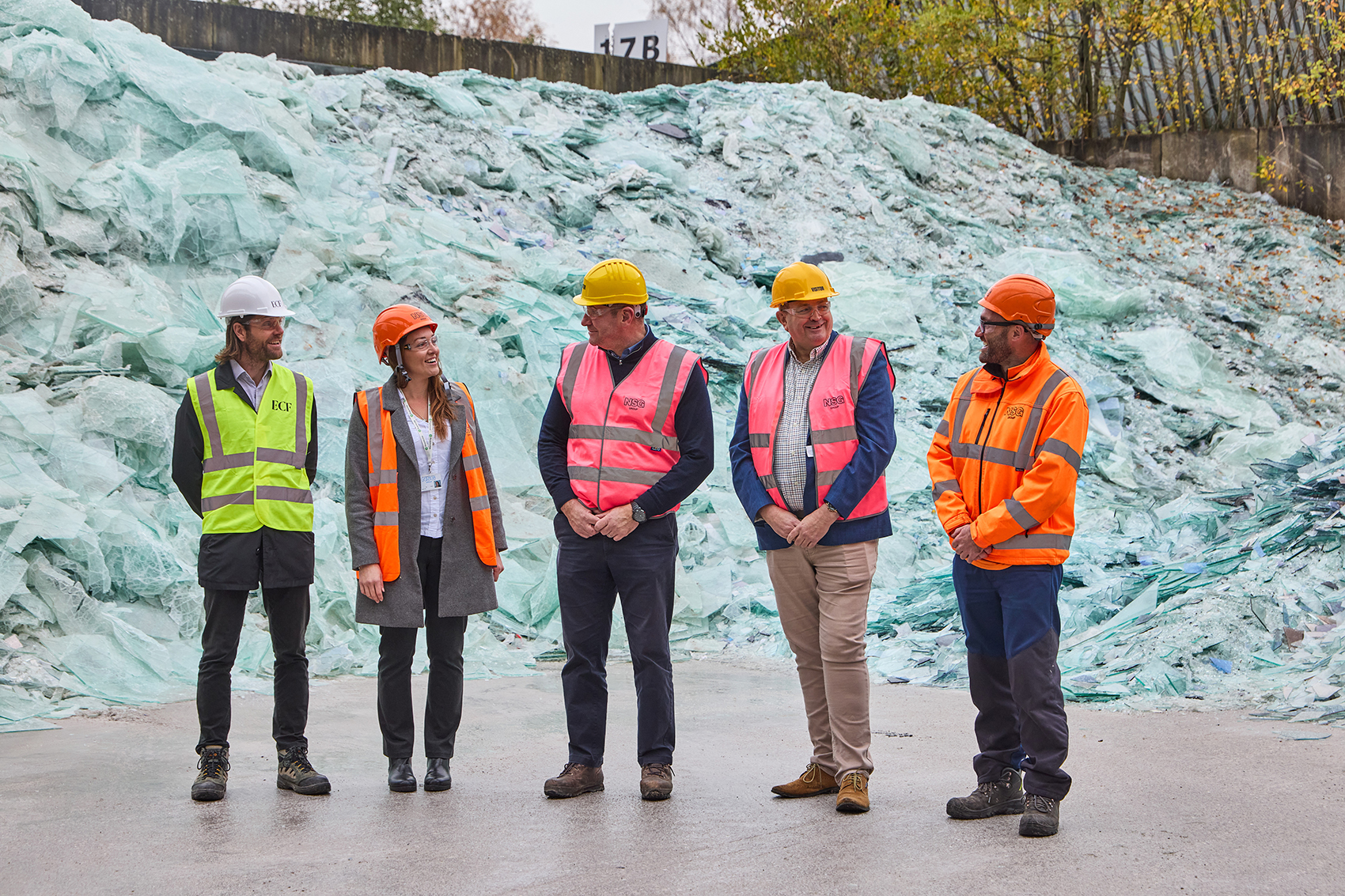

Pilkington United Kingdom Limited has played a key role in reducing waste and cutting carbon emissions as part of the major regeneration of St Helens town centre, by recycling glass recovered from demolished buildings for use in new developments.
The glass manufacturer, part of the NSG Group, worked with main contractor VINCI Building to recover 7.34 tonnes of glass from two key town centre sites—the Hardshaw Centre and the bus station—as part of the first phase of the redevelopment. The material, equivalent to the annual glass recycling of 150 average households, was processed and reused to make new float glass.
Rather than being sent to landfill, the reclaimed glass was melted down through Pilkington’s renew:glass scheme. The process saved 5.13 tonnes of CO₂e emissions and avoided the need for 8.8 tonnes of virgin raw materials.
VINCI is delivering the regeneration on behalf of St Helens Borough Council and its partner, the English Cities Fund (ECF), a joint venture between Homes England, Muse and Legal & General. The demolition work was carried out by Bradley Group, with Pilkington overseeing the assessment, removal, and recycling of the glass.
Pilkington’s renew:glass programme sorts used glass into cullet—small, clean fragments that can be melted more efficiently. This contributes to lowering the carbon footprint of the glass manufacturing process and reducing construction waste.
The initiative also supports the NSG Group’s climate goals under the Science Based Targets Initiative, which commits the company to cutting greenhouse gas emissions by 30 per cent by 2030 and achieving carbon neutrality by 2050.
Bea Roberts, Specification Manager at Pilkington, said the project “puts sustainability at the heart of regeneration,” adding that reusing and recycling materials builds “a cleaner future for our industry and local community.”
Councillor Richard McCauley, Cabinet Member for Regeneration at St Helens Borough Council, said the scheme showed how the town was “moving together to convert sustainability from ambition to action.”

He also welcomed the involvement of Pilkington, a company founded in St Helens, which he said “continues to revolutionise industry so positively.”
Matt Whiteley, Senior Development Manager at ECF, said the project aimed to reuse 98 per cent of materials from the site. “The recovery and recycling of glass by Pilkington UK is a perfect example of how collaboration can reduce waste, cut carbon and create a truly circular approach to development,” he said.
The first phase of the St Helens redevelopment is part of a broader plan to regenerate the town centre while embedding environmental sustainability into its delivery.
Why This Matters: This initiative by Pilkington sets a powerful precedent for circularity in construction. It shows how the glazing sector can lead on sustainability by turning demolition waste into low-carbon, high-value products.