

News
NEWS: Reynaers reports measurable carbon reductions and broad‑based sustainability push

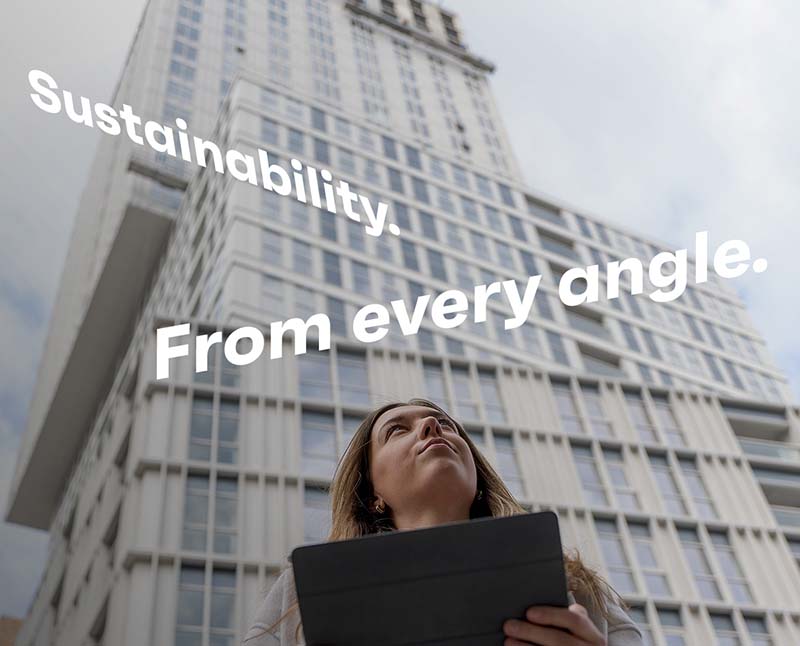
Reynaers Group has published its new annual sustainability report, Our Sustainable Road Ahead 2024–2030, revealing an 8.5 % reduction in operational carbon and a 13.6 % drop in embodied carbon compared with its 2019 baseline. The company attributes these gains to a “comprehensive approach” covering its operations and product lifecycle.
The publication marks the halfway point in Reynaers’ commitment under the Science Based Targets initiative (SBTi) framework: the firm aims for a 46.2 % absolute emissions reduction and a 55 % relative cut by 2030.
While embodied carbon remains a focus—especially in the construction sector—the report emphasises a wider sustainability agenda. Reynaers’ campaign, “Sustainability. From Every Angle,” challenges the notion that embodied carbon alone defines long‑term sustainability in the built environment.
On the aluminium front, Reynaers reports progress: in 2019 the average footprint of sourced aluminium was 5.16 kg CO₂e per kilogram. By 2024 this figure has been reduced by around 20 % to 4.13 kg CO₂e/kg, with a further target of 2.81 kg CO₂e/kg set for 2030.
The 112‑page report cites a range of contributing measures beyond carbon accounting. These include investment in new low‑energy campuses in Poland and Switzerland, the transition to electric vehicle fleets, and product eco‑design initiatives promoting circularity. The firm notes it now offers 15 “Cradle to Cradle” certified systems with more than 50 variants—spanning its MasterLine, ConceptSystem 77, SlimLine 38 window and door ranges, as well as its curtain‑wall ranges including ConceptWall, ElementFacade 7 and SlimWall 35.
Commenting on the publication, John McComb, Technical Director and Sustainability Champion at Reynaers Aluminium UK, said: “Sustainability is at the core of what we do … this new report highlights the significant gains we have made in our journey to a sustainable future.” He added that their strategy “looks beyond the focus on embodied carbon in the industry, to cover all aspects of our products and operations.”
McComb went on to emphasise the importance of adaptability and continuous change: “It is essential to understand that sustainability is constantly evolving … we must be adaptable and foster a culture of continuous education and change within the industry as a whole.” He noted that a recent webinar outlined their “journey to a more sustainable future” and said further webinars are planned for 2026 to explore various “angles” of impact in sustainable construction.
Guided by the SBTi framework, Reynaers’ ambitious sustainability goals reflect its intention to embed low‑carbon thinking across its processes, products and infrastructure.
Why This Matters: By following a comprehensive approach to sustainability, Reynaers have made some significant gains within the business. By making a realistic overall target to achieve an overall 55% relative cut in emissions by 2030, the company can make incremental decreases year-on-year with this overall target as the end-goal. Sustainability used to be just a buzz word but now firms like Reynaers are taking full responsibility in setting in at the centre of its overall future and current stategy.