

Diversity within the hardware segment is becoming one of its defining characteristics, particularly across window and door systems. New product concepts continue to emerge, but for manufacturers and suppliers the central challenge remains how best to convert that breadth into long-term commercial value.
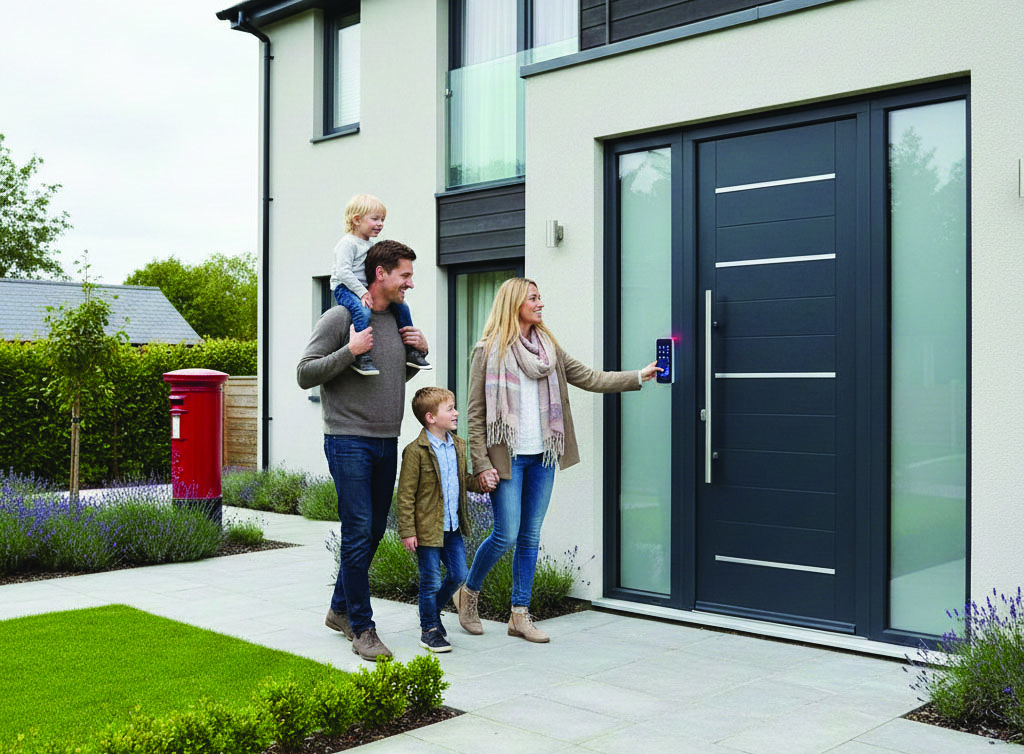
One area drawing increasing attention is digital access hardware aimed at a younger cohort of homeowners. The appeal is clear: the ability to unlock a door remotely from a phone, paired with concealed fittings that preserve the visual appeal of the door itself. For many in the sector, design remains as important as function, and products that balance both are seen as better placed to gain acceptance.
Yet hesitation persists. During discussion at this year’s Glazing Summit in the UK, one panel member noted that some buyers resist digital door technology because they see it as short-lived or novelty-driven. A front door, by contrast, is typically a long-term purchase, raising concerns about compatibility and obsolescence over time.
That concern was met with a familiar comparison. The evolution of vehicle access was cited as a parallel, moving from simple keys to fobs and, more recently, biometric entry. Each step initially carried doubt, yet gradual adoption followed as users became more comfortable with change. From that perspective, connected access at home is viewed as a natural progression rather than a departure.
Supporters of this view argue that many household systems are already governed by digital controls, making the front door a logical extension. The presence of such products across the catalogues of numerous hardware suppliers is offered as evidence that demand is not purely speculative.
Looking ahead to the next 12 to 18 months, expectations for the UK market are measured. Trading conditions are widely described as difficult, with limited room for complacency. One consistent message is that reliance on a single sales channel or a narrow product offer is unlikely to be sufficient.

Instead, firms are being urged to broaden their activities, explore adjacent markets and reassess where they want their businesses to sit over the next five to ten years. Repeating established approaches may feel safe, but many in the sector see greater risk in standing still.
UK Correspondent