
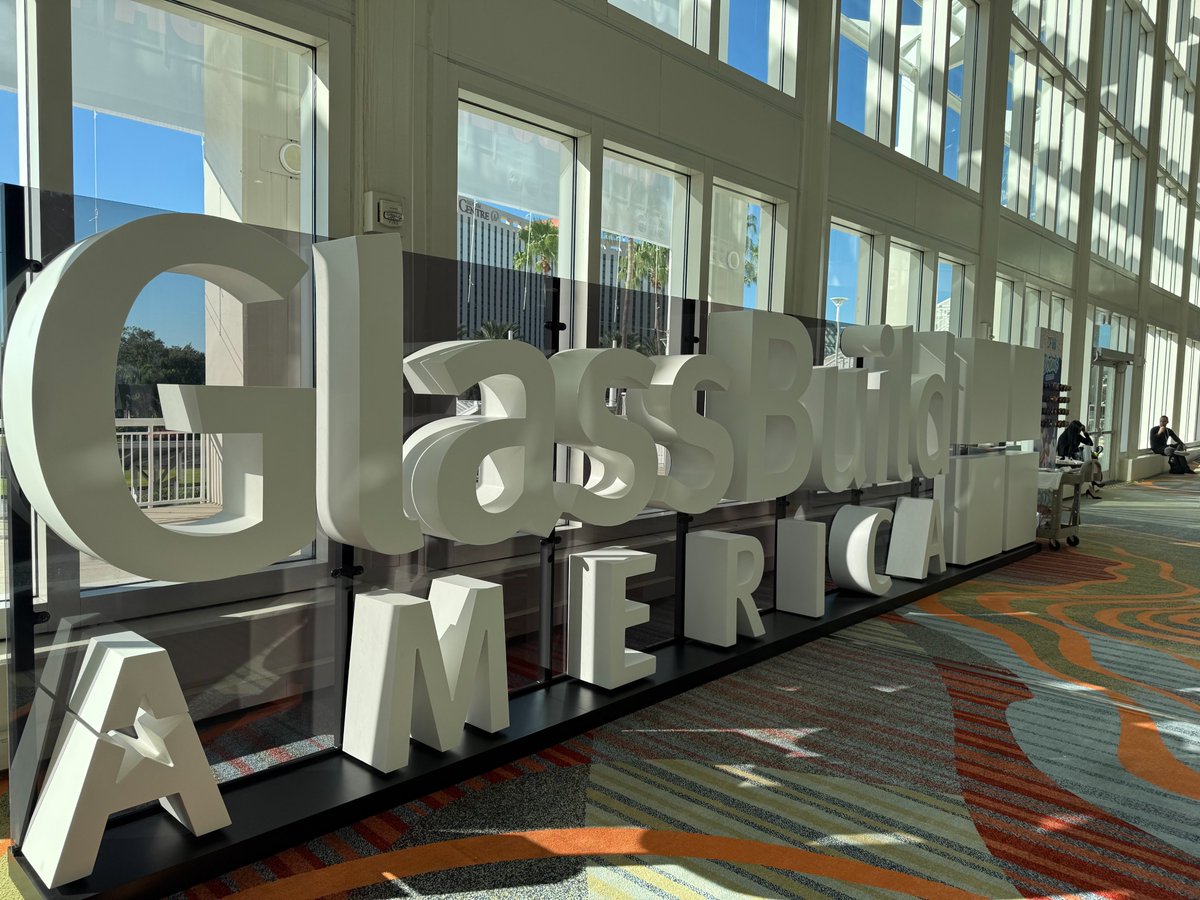

GlassBuild 2025 convened in Atlanta this year with a mood of cautious optimism, as North America’s largest fenestration event signalled a measured but unmistakable shift in industry priorities. Amid ongoing cost inflation, subdued construction activity and an uncertain economic backdrop, the three-day exhibition drew increased attendance and showcased a sector preparing for its next growth phase through renewed capital investment, automation, and a sharper focus on energy and operational performance.
Exhibitors noted a meaningful change in buyer behaviour, with commercial contractors—largely absent in recent years—returning in greater numbers. Procurement conversations extended beyond price to strategic concerns such as labour resilience, automation readiness and supply chain continuity. The uptick in commercial interest pointed to growing confidence that investment in long-term capability is now preferable to waiting out short-term market volatility.
Automation emerged as the dominant theme across the show floor. A new generation of machinery for cutting, tempering and insulating glass was on display, featuring advances such as predictive maintenance, material yield optimisation and tighter production tolerances. AI-driven inspection systems attracted the largest crowds, offering fabricators a route to reduce waste and offset labour shortages. Several US-based processors confirmed they were finalising multi-million-dollar investments in automated lines—an indication that glass manufacturing’s long-awaited digital pivot may finally be transitioning from theory to implementation.
The focus on technology was matched by mounting urgency around energy performance. With several states expected to introduce tougher efficiency codes and national standards under review, suppliers responded with expanded portfolios of low-E coatings and improved spacer and sealant solutions. Crucially, these were increasingly positioned not just as product upgrades but as system-level enhancements aimed at delivering whole-window performance. Vacuum insulating glass, though still in its early stages in the US, generated sustained interest as fabricators assessed whether its thermal benefits could outweigh logistical hurdles.
In the window and door space, themes of flexibility and sustainability ran through many product launches. Vinyl and composite manufacturers showcased advances in small-batch customisation and smart-home compatibility, while aluminium suppliers leaned into environmental credentials, highlighting recycled content and lifecycle metrics designed to support developers’ ESG reporting. Several brands debuted products targeted at the mid-range residential market, an indication of expectations for recovery in single-family housing starts by 2026.
Yet despite the visible innovation, many exhibitors framed 2025 as a transitional year. Cost pressures, labour availability and access to finance remain unresolved structural challenges. The consensus was that success in the current climate will rely as much on execution and efficiency as on disruptive product innovation.

Still, the tone at GlassBuild was one of preparation rather than pause. While few reported strong order pipelines, the commitment to capability-building—especially in automation and high-performance systems—signalled a sector looking beyond short-term headwinds. If macroeconomic conditions begin to stabilise, the investments made this year could position glass and fenestration firms for renewed competitiveness in the next cycle.
In an industry often defined by caution, that sense of strategic momentum offered a welcome measure of confidence.
Mark Thompson – Editor, Glazingtoday.com