

Smart home security technology is often marketed on features and technical performance, but new industry commentary suggests a shift towards addressing more subtle, everyday concerns around personal safety.
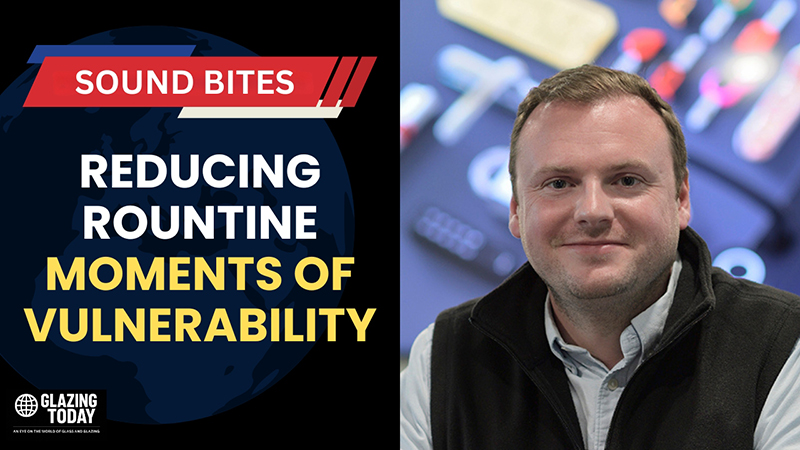
Alexander Dutton, sales director at Brisant Secure, said recent research commissioned by the company had prompted a reassessment of how the sector communicates value to homeowners. A key finding, he noted, was that smart technology such as keyless entry systems and app-enabled locks should not be seen as optional enhancements, but as tools that reduce routine moments of vulnerability.
The door and hardware industry has traditionally focused on specifications, product ratings and compliance with testing standards. While these remain important, Dutton argued they do not fully capture what drives purchasing decisions. Homeowners, he said, are ultimately seeking reassurance rather than technical detail.
The research highlighted a disconnect between how security products are presented and how they are experienced in daily life. For many, the simple act of arriving home, particularly after dark, can carry a sense of unease that is rarely addressed in product messaging.
This perspective is echoed by Annabel Mantel, managing director of Ultion, who has emphasised the importance of incorporating lived experience into product development. Drawing on conversations with women, Mantel identified the front door as a critical point of perceived risk, with more than two thirds reporting that they feel less safe in the evening and often adjust their behaviour accordingly.

Such insights are shaping a more pragmatic approach to smart security, focused on reducing friction and exposure rather than adding features. Keyless systems, for example, can remove the need to search for keys in poorly lit environments, a moment often cited as a source of anxiety.
Mantel also pointed to the broader need for greater diversity within the technology sector, arguing that a wider range of perspectives is essential to designing products that reflect real-world concerns.
Why This Matters: This is a key learning point for the UK fenestration sector. There is little doubt that widespread adoption of smart locking technology has been held back. Installers remain reluctant, and it appears the products are often being positioned incorrectly to homeowners.
Customers are not interested in technical jargon or complex specifications. Instead, they want to understand how these solutions address real-world concerns and improve everyday safety.
Product messaging at the retail level therefore needs to be reconsidered. The key question is how the industry can bring installers on board with this shift in approach.