

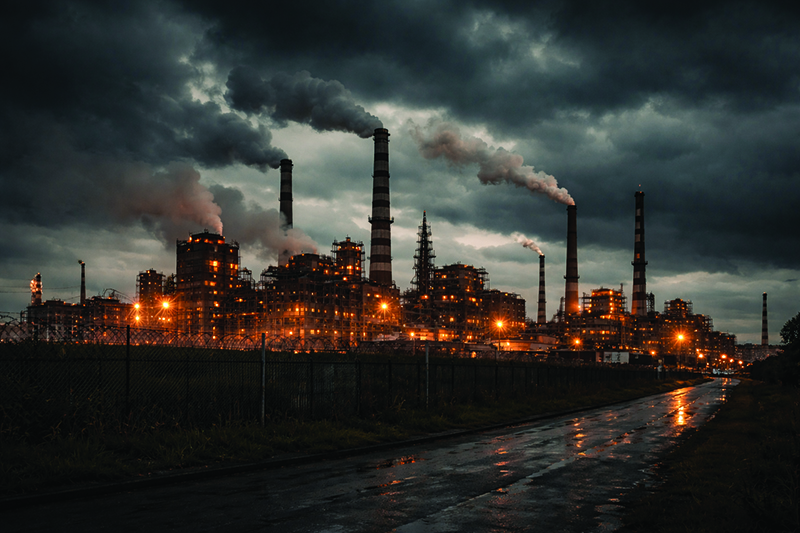

By any measure, the quiet unravelling of Britain’s chemical industry ranks among the most consequential industrial shifts of recent decades. It is happening plant by plant, often unnoticed beyond local communities, yet its implications stretch far beyond chemicals themselves. For sectors that rely on chemical building blocks — from pharmaceuticals and fertilisers to PVC-U profiles, sealants and glazing systems — the warning signs are now impossible to ignore.
Salt is a good place to start. Britain sits on vast reserves left behind by an ancient sea, and for centuries sodium chloride has underpinned everything from food preservation to modern chemistry. At a sprawling site in Cheshire, industrial-grade salt is still pumped from underground as brine, evaporated using enormous amounts of energy and shipped out along the Manchester Ship Canal. This mundane white crystal is the feedstock for around 90 per cent of pharmaceuticals and plays a crucial role in water purification.
Yet even here, survival is in doubt. Decades-old evaporation vessels corroded by saltwater need replacing. The bill runs to £150mn. With energy prices around four times those faced by competitors in the US or Middle East, the operator is seeking government help. Without it, Britain could, for the first time in modern history, become an importer of a resource it once took for granted.
This is not an isolated story. It is emblematic of a chemical sector facing what industry veterans describe as the worst recession in living memory. The closures are accelerating, particularly across Teesside, the Midlands and Scotland. Soda ash production has ceased altogether, leaving the UK dependent on imports for a material essential to glassmaking, paper and detergents. Fertiliser and ammonia plants have been shut, forcing reliance on overseas supplies for substances vital to agriculture and defence.
The retreat marks a dramatic reversal. Britain was once a global chemical powerhouse. ICI, now long dismantled, pioneered products ranging from Perspex — originally developed for Spitfire canopies — to early anti-malarial drugs. Its integrated sites made plastics, fertilisers, explosives and advanced materials at scale. Today, many of those complexes resemble industrial graveyards, with silent pipelines and mothballed units where flames and steam once dominated the skyline.
At Wilton on Teesside, now partly owned by the US group Huntsman, only a handful of plants remain operational. Aniline, a key input for car windscreens, plywood and armaments, is one of the last still running. Even that is under pressure. Executives warn that climate-related taxes, more than raw fuel costs, will define whether such facilities survive the next five years.

The national security implications are stark. Explosives depend on ammonia and sulphuric acid, both now imported. Fertilisers depend on the same chemistry. When Billingham, once the heart of Britain’s nitrogen industry, effectively stopped production, the moment passed with little public debate.
The government has begun to take notice. A £120mn intervention to keep the ethylene plant at Grangemouth open marked the first significant state backing for the sector in years. Ethylene is a foundation chemical, essential for plastics, pharmaceuticals and cleaning products. Once it goes, entire value chains collapse with it. The rescue suggests a belated recognition that some industries are too foundational to lose.
Still, many fear it amounts to little more than a sticking plaster. Britain faces the highest industrial electricity costs in the developed world, driven in part by decarbonisation policies layered onto an already fragile manufacturing base. Bulk chemicals remain energy-hungry by nature, and global competition — particularly from China — is relentless.
There are glimmers of optimism at the fringes. At Imperial College London, start-ups are using AI and data to help pharmaceutical companies scale production more efficiently. These businesses attract investment precisely because they are light on energy and heavy on intellectual property. But they do not replace the loss of physical manufacturing capacity.
For downstream industries, the lesson is clear. PVC-U profiles, glazing sealants, interlayers and coatings all depend on reliable access to base chemicals. As domestic supply disappears, exposure to geopolitical risk, volatile shipping costs and carbon-intensive imports grows. What is happening to chemicals today could happen tomorrow to any sector that assumes its raw materials will always be available.
Britain is edging towards an economy that designs, regulates and consumes, but increasingly does not make. Chemicals show why that matters. Without the building blocks of modern manufacturing, the rest of the industrial ecosystem becomes dangerously hollow.
Why This Matters: Britain, once a nation of industrial excellence, is now facing a desperate struggle to cling on to its position as a leading supplier of chemical building blocks used across a wide range of manufacturing sectors. Rising energy costs sit at the core of the problem, and if this trend continues many sectors will face increases in raw material costs. With this cost pressure impacting the UK’s chemicals industry, the most likely scenario is a growing reliance on imported raw materials.
The Government is in a difficult position. Does it continue to pump money and support into an ageing chemicals sector? Signs suggest the UK is instead looking to pastures new, as ministers eye greater gains in the service sector and artificial intelligence. This is a dangerous gamble, as the wider industrial ecosystem relies on strong domestic building blocks.
John Cowie – AI and Manufacturing Correspondent