
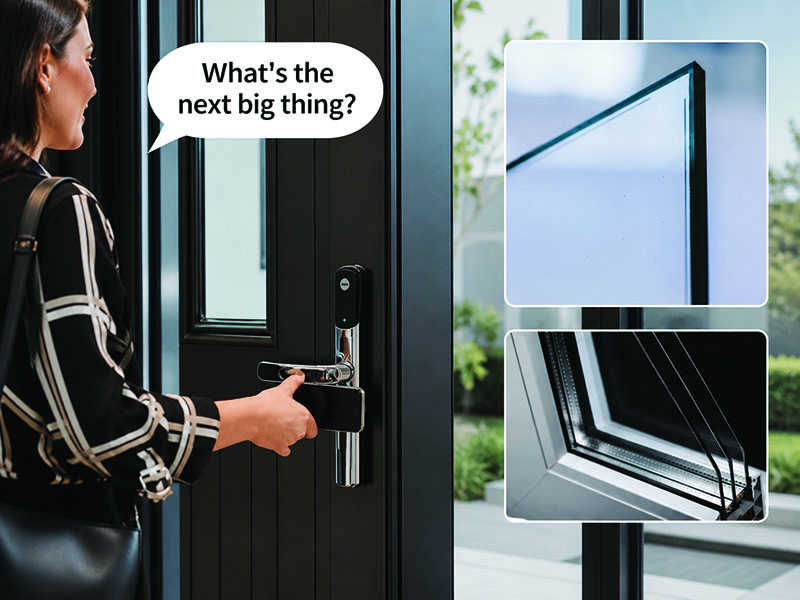

A question I am often asked is what the next important innovation in fenestration will be. Over the past 10 to 15 years, the UK market has been shaped by a series of product developments that moved quickly from specialist interest to mainstream demand. Composite doors, flush sash PVC-U windows and, perhaps most successfully of all, bi-fold doors, have each helped to define phases of growth in the sector.
Today, the focus has shifted. The battleground is increasingly centred on vacuum glazing, triple glazing and smart locking. Of the three, smart locking feels like the most natural progression for windows and doors, yet its wider adoption has been held back by a trade that has too often dragged its heels.
Triple glazing and vacuum glazing are different. Both are being pushed to the front of the queue because they speak directly to the drive to improve the insulation of UK homes as regulations continue to tighten.
Triple glazing has probably received the most attention so far. But vacuum glazing is now entering more conversations around how to improve the energy efficiency of homes, particularly existing properties.
That matters because retrofit is becoming one of the defining issues for the fenestration industry. The need to upgrade older buildings is growing, and the industry is having to look harder at solutions that improve performance without creating unnecessary disruption.
Vacuum glazing offers one answer. Unlike conventional double or triple glazing, it works by removing the air between two panes of glass, creating a vacuum that significantly reduces heat transfer. The result is a high-performance unit that can achieve low U-values while retaining a slim profile closer to single glazing.

That slimness is central to its appeal. In many older buildings, and especially in heritage or conservation projects, replacing windows with deeper modern systems is not realistic. Frames may need to be retained, sightlines protected and the character of the building preserved. Vacuum glazing offers a route to better thermal performance without fundamentally changing the appearance of the property.
For architects, specifiers and property owners, this is an attractive proposition. It allows energy efficiency to be balanced with design constraints, while also supporting wider sustainability goals. In many cases, improving what already exists is more environmentally responsible than demolition and rebuild.
There are barriers. Cost remains a significant issue, with vacuum glazing typically priced above conventional alternatives. Manufacturing capacity is also more limited, which can affect availability and lead times. These are not minor obstacles, particularly in a market where price and supply certainty often shape buying decisions.
Even so, the direction of travel is clear. As demand for retrofit solutions grows, manufacturers are likely to invest in scaling production and reducing costs. That should make vacuum glazing more accessible to a wider market over time.
Its rise also says something broader about where fenestration is heading. The industry can no longer focus only on new-build projects or the next eye-catching product trend. There is now a growing recognition that the performance of existing buildings has to improve, and that this will require products that can be integrated into current structures with minimal disruption.
For installers and fabricators, that creates both opportunity and challenge. Understanding how to specify, handle and install vacuum glazing will become increasingly important if demand continues to build.
The next phase of success for fenestration may depend as much on how well the industry retrofits the existing housing stock as on how quickly it innovates for new-build. Vacuum glazing is not the only answer, but with its combination of performance and practicality, it is likely to sit at the centre of that transition.
Why This Matters: The importance of innovation can never be underestimated, as it drives future sales and profits. The cycle is interesting to witness. What is revealing about vacuum glazing and triple glazing is the absence of any really significant marketing drive by key manufacturers. Only one company has really grasped the marketing initiative with triple glazing, and they are beginning to witness real traction.
When it comes to vacuum glazing, it is far more low key, and this can sometimes lead to a low take-up rate. Smart locking has suffered from this as well. The trade market likes to see products marketed to them. They often believe that if a supplier truly believes in a product, they will heavily promote it, and the trade will then promote it to their own customers.
The end result is homeowners becoming aware of the product and, consequently, buying it.