

Britain’s long-running love affair with open-plan living is entering a new phase, as homeowners and designers reassess the realities of life in fully opened-up spaces.
For more than a decade, knocking through was the default ambition of renovation projects. Kitchen walls were removed, reception rooms merged and steel beams installed to create expansive, light-filled interiors. In the typical three-bedroom semi-detached house, the wall between front and dining room was routinely sacrificed. Estate agents championed “open plan” layouts, and developers followed.
Now, however, a more nuanced approach is emerging. While natural light and visual connection remain highly valued, homeowners are increasingly weighing them against privacy, noise control and energy efficiency. The rise of hybrid working has blurred domestic and professional boundaries, while higher energy bills have sharpened awareness of the cost of heating large, uninterrupted volumes. Families, too, are more sensitive to everyday noise — from video calls to television and teenagers.
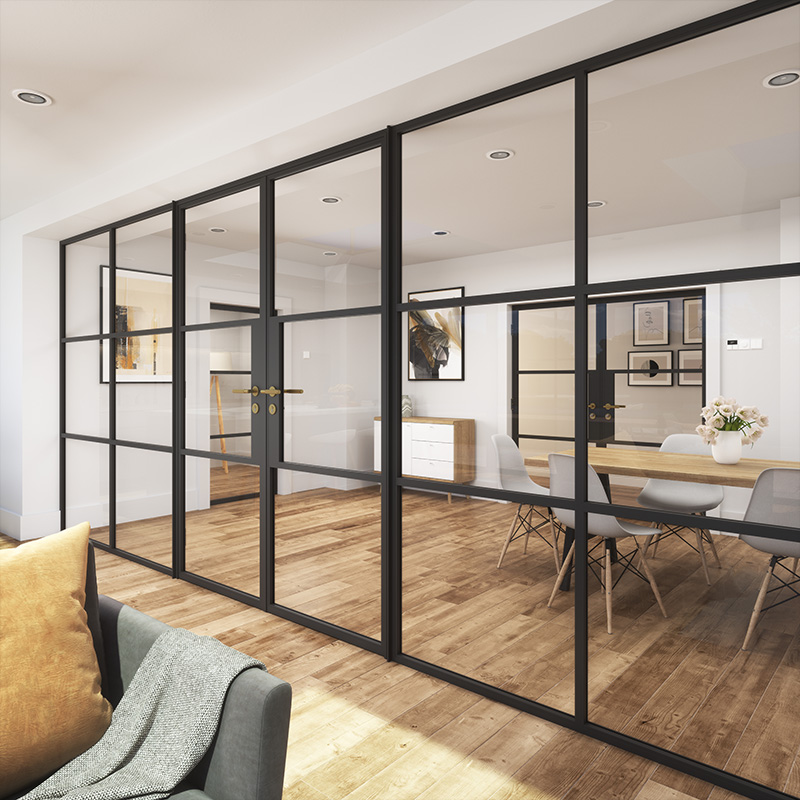
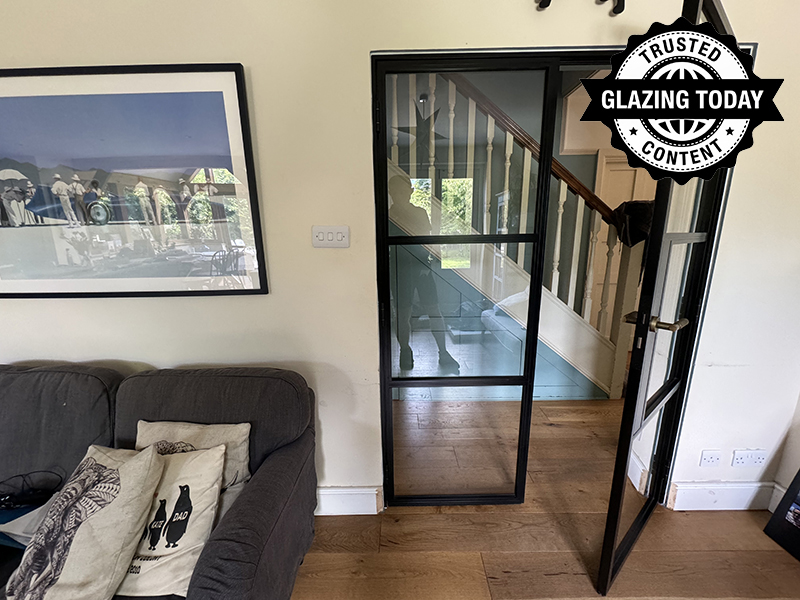
Rather than reverting to traditional cellular layouts, the response has been the growth of internal glazing systems. Slim-framed glass partitions, steel-look screens, pocket doors and sliding panels are being installed to divide spaces without blocking light.
Across suburban refurbishments and higher-end homes alike, glazed partitions are carving out studies within living areas, separating kitchens from dining rooms and creating quieter zones while maintaining brightness. The aim is flexibility: connected spaces that can be closed off when required.
One installer who identified the opportunity early said many in the replacement window and door trade initially saw internal work as outside their remit. “But in the eyes of the homeowner, an installer of windows and doors should be able to fit them inside as well as outside,” he said. Faced with a client who wanted an open-plan area partitioned, he turned to his aluminium supplier for a solution rather than decline the job.
Homeowners describe similar reasoning. One said their once open interior no longer suited a growing family. “Our lounge flowed into the dining room. As our children got older, we wanted more privacy and separate zones while maintaining the light and airy feel. Internal glazing was the obvious answer,” they said, adding that it felt logical to use the same installer who had fitted their windows and doors.
For glazing specialists, the shift represents a potential new market. Traditionally focused on the building envelope — bifolds, sliding patio doors and rooflights — the sector faces tighter margins and intense competition. Internal systems offer scope for growth within existing properties, drawing on established skills such as precise measurement, hardware specification and careful installation.
There are practical advantages. Internal projects are not subject to the same planning constraints as external alterations and can be completed room by room, often with shorter lead times. Because they sit at the centre of daily life, homeowners may also be prepared to invest in higher-quality finishes.
Manufacturers are responding with modular internal ranges that combine fixed screens, hinged doors and sliding panels. Improved acoustic performance and thermal separation between zones are increasingly promoted as benefits within the home itself.
As Britain’s homes shift from indiscriminate openness to what might be described as curated transparency, the glazing industry is being urged to see glass not just as a bridge to the outdoors, but as a tool for shaping life inside.
Partner Content: The Korniche Internal Glass Partition system has been launched to meet growing demand for open-plan living and internal zoning solutions. Featuring slim aluminium profiles, bespoke hardware options and high-spec acoustic glass, the system offers flexible configurations from single doors to multi-panel partitions, delivering a premium, design-led finish.
Chris Wann, Operations Director at Korniche, said the launch reflects the company’s commitment to supporting the trade with products that combine performance, aesthetics and installer-friendly features. He added that the new system will help installers work more efficiently, win more projects and achieve high-end results for homeowners. www.korniche.co.uk/product/glass-partition