
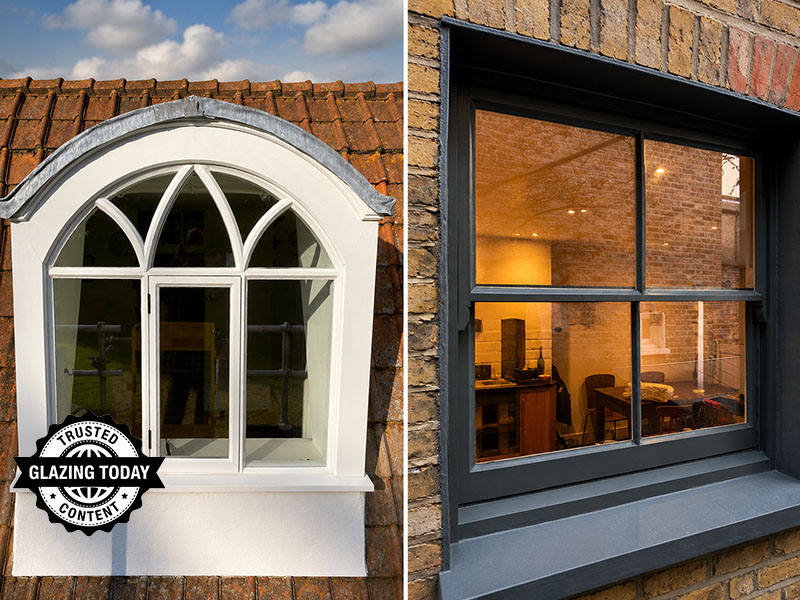

Vacuum glazing is emerging as a more practical option for heritage refurbishment projects as falling costs and improved performance help narrow the gap with established alternatives.
The technology, long used in industrial applications, is attracting renewed interest in high-performance glazing because of its thermal and acoustic properties. London-based ASWS has used custom-made units supplied by 1st Vacuum Glass to demonstrate that an evacuated 8mm insulating glass unit can exceed the thermal insulation value of triple glazing.
For listed buildings and properties in conservation areas, cost is rarely the only consideration. Aesthetic impact and the principles of conservation often take priority, particularly where original frames and fenestration patterns need to be retained.
Supporters of vacuum glazing argue that it can help meet those requirements because units can often be fitted within existing rebate depths. This can reduce labour, limit intervention in historic fabric and, in some cases, avoid the need for full replacement of original frames.
The purchase price of vacuum glazing units is also continuing to fall as adoption grows, narrowing the gap with slimline double glazing and secondary glazing systems. Both alternatives can be more visually intrusive in sensitive buildings.
William Green, sales and operations manager at 1st Vacuum Glass, said demand for LandVac vacuum glass was increasing because of its thermal and acoustic performance, as well as improving cost competitiveness.

“We are seeing a strong increase in demand for LandVac vacuum glass, driven by its superior thermal and acoustic performance,” he said.
“This growth is also being supported by improving cost competitiveness, positioning it as a financially viable alternative to more commonly used solutions such as slimline double glazing.”
Mr Green said LandVac units can be as little as 6.3mm thick, with U-values cut to 0.4 W/m²K. He added that the product carries a 25-year warranty, giving specifiers confidence over long-term performance.
He said the ability to install the units with minimal alteration to historic fabric was a key consideration in conservation areas, adding that organisations such as Historic England increasingly recognise vacuum glazing as a viable way to improve energy performance while retaining original windows.
Another potential benefit is the reduced risk of “double reflection”, a visual effect often seen from outside double-glazed windows. Because vacuum units have a much narrower gap between the inner and outer panes, the effect can be greatly reduced.
Kris Bennell, operations director at ASWS, said the company’s work often involves listed buildings and conservation areas where maintaining original window patterns is essential.
He said Westminster City Council’s City Plan Partial Review, published in January, had underlined the need to balance heritage protection with energy conservation.
The review includes a Retrofit First policy requiring developers to consider adapting existing buildings before demolition and rebuilding. Mr Bennell said this approach was likely to increase demand for vacuum glazing in future refurbishment projects.
Why This Matters: Vacuum glazing’s advance into heritage fenestration marks a structural shift for the UK sector. With U-values as low as 0.4 W/m²K in units just 6.3mm thick, the technology now outperforms triple glazing aesthetically and thermally — without compromising historic fabric. Westminster’s Retrofit First policy signals growing regulatory tailwinds. For fenestration businesses, heritage contracts are no longer a niche; they are a growth market.