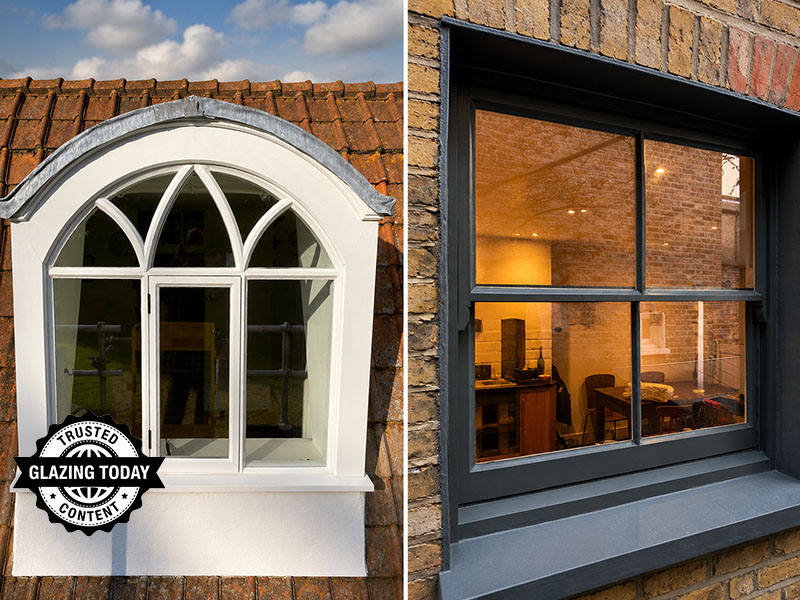



As hundreds of smaller installers exit the market and premium players hold firm, the fenestration sector is undergoing a structural fracture that will reshape how millions of homes are fitted and finished
Walk into any premium showroom in Surrey or Cheshire and you might be forgiven for thinking the glazing industry is in rude health. Sleek aluminium bi-folds gleam under spotlights. Consultants talk knowledgeably about U-values, thermal bridging and acoustic performance. Orders, they’ll tell you, are holding up rather well.
Drive thirty minutes to a trading estate on the outskirts of a provincial town, however, and the mood in a volume installer’s yard tells a different story. Vans stand idle longer than they should. The phone rings a little less. A regional competitor, one that had been trading for fifteen years, quietly folded in February, and nobody was entirely surprised.
This is the uncomfortable reality of British fenestration in 2026. The market is not simply weak. It is fracturing along a fault line that divides those who sell on quality, design and specification from those who compete, sometimes desperately, on price.
The numbers don’t lie
Over 600 manufacturers and installers have exited the UK fenestration sector in the past three years, the result of a prolonged squeeze combining stubbornly high material costs, a consumer confidence slump and mortgage market uncertainty that has kept homeowners in a holding pattern. For companies operating in the mid-to-lower tier, relying on high-volume, low-margin residential replacements, the arithmetic has simply stopped working.

The cost of a standard casement window installation has not risen in line with energy, labour or logistics costs. Fabricator gate prices have climbed. Glass unit costs remain elevated against the pre-inflationary baseline. And consumers, trained by a decade of comparison-site culture, are still anchoring their expectations to figures from 2019.
Meanwhile, the premium segment, characterised by aluminium systems, high-performance glazing, bespoke colour finishes and architect-led specifications, has proved considerably more resilient. Consumers in this bracket, largely insulated from interest rate sensitivity, have continued to invest in their homes. They are not buying windows. They are buying architectural statements.
A tale of two strategies
The divergence is not merely about product mix. It reflects a deeper strategic split. Premium installers have invested in the full customer journey, from polished digital presences and CAD-rendered visualisations to RIBA-registered specifications and long-standing relationships with architects and developers. Some have moved deliberately away from retail altogether, preferring commercial contracts, new-build partnerships and high-end residential refurbishment schemes where design integrity, not price, drives the brief.
Volume installers, by contrast, are caught in a structural trap. To compete, they must keep prices low. To keep prices low, they must maintain volume. But in a market where demand has receded and homeowners are hesitating, volume is precisely what is missing. Some are attempting to trade upwards, adding aluminium lines and investing in a more premium sales environment, but the transition requires capital, time and a customer base that may not follow them.
It is worth saying plainly that not everyone in the volume market is struggling through mismanagement or complacency. Many are well-run operations afflicted by macroeconomic forces entirely outside their control. The energy cost shock, the withdrawal of Help to Buy, the cost-of-living squeeze on discretionary spending: none of these have anything to do with how efficiently you load a van.
The consequences of consolidation
The contraction of the volume market carries risks that extend beyond the sector itself. A thinner installer base means reduced competition, longer waiting times and patchy geographic coverage, particularly in lower-income areas where aluminium bifolds are not the aspiration, nor should they be. The danger is a two-tier market in the most troubling sense: excellent fenestration for those who can afford it and a degraded, underserved experience for everyone else.
There is also a workforce dimension that is too easily overlooked. Many of the businesses that have closed were the training grounds for the next generation of fitters, fabricators and surveyors. When a fifteen-person company shuts its doors, that knowledge disperses or leaves the sector entirely.
The premium end of the market may be weathering the storm well enough. But a healthy industry needs both its strata intact. Right now, only one of them feels like it is standing on solid ground.
This piece draws on industry data and interviews conducted across the UK fenestration supply chain.