

For installers working with homeowners who want wide glazed openings and uninterrupted views, the final detail can often become the awkward one. Ultra slim sliding doors may deliver light, openness and a strong visual finish, but dressing those large moving panels is far less straightforward than many clients expect. As IDSystems points out, the challenge is not simply choosing a blind that looks right. It is making sure it works with the mechanics of the door itself.
That matters because the usual rules do not apply. Sliding doors overlap, move horizontally and often span substantial widths. Treating a six metre set of doors like a standard window is where problems begin. Edward Stobart, technical sales manager at IDSystems, warns that some traditional perfect fit or clip on blinds can damage door frames. He says installers need to think about both the drop, from ceiling to floor, and the stack, or the space blinds take up when opened, before the doors are even installed.
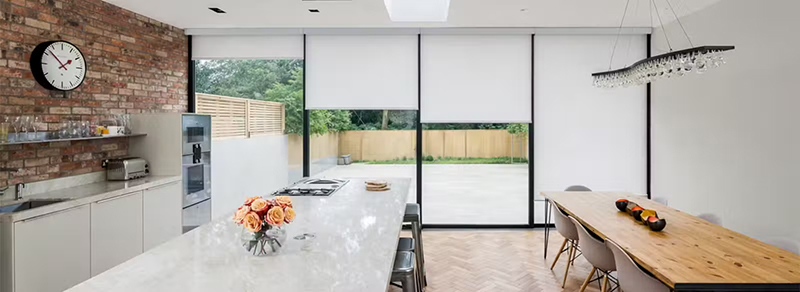
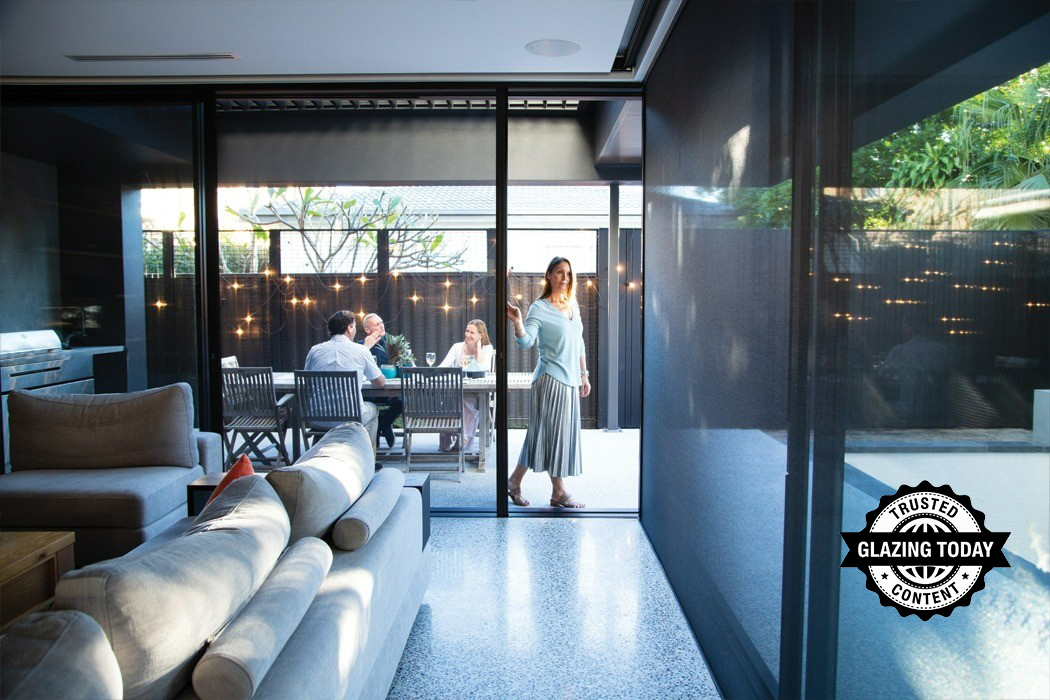
For the trade, that makes early planning essential. Ceiling mounted blinds remain the most common solution because they sit above the frame and allow the doors to slide freely. Recessed sliding screens offer another route, particularly where a clean, integrated finish is part of the brief. Positioned within the side reveal and set internally to the door tracks, retractable sun shades and insect screens can support the inside outside living look many homeowners want. But there is a clear caveat. Because these are incorporated into the door system itself, they are not generally suited to retrofitting.
External blinds are also gaining ground, and for understandable reasons. Positioned outside the glass, they stop direct sunlight from reaching the door system in the first place. That makes them a practical response to overheating, which is often one of the homeowner’s main concerns alongside privacy and glare. Installers discussing specification with customers are therefore dealing with more than decoration. They are helping solve a performance issue.
Then comes measurement, where small errors can quickly become expensive ones. IDSystems stresses the importance of accurate outside recess measurements, allowing enough overlap to minimise light gaps. On wider openings, multiple roller blinds are usually the most practical choice, with each section measured individually and aligned to the panels. Height also needs careful attention, from the intended fixing point down to the desired finish, whether just below the frame or to floor level. And just as important are the practical obstructions, including handles and frames, which can interfere with how the blind hangs.
Stobart identifies stacking depth as the mistake people most often overlook. Vertical blinds dropping from the ceiling may appear simple on paper, but when the doors are fully open those blinds need somewhere to gather. If the track does not extend past the opening, the blinds can block the view or restrict airflow when the doors are open. In recess installations, his advice is equally direct. Measure in multiple places, use the smallest dimensions, and confirm there is enough depth for the mechanism.

As for blind types, the document offers a clear hierarchy of options. Roller blinds are a strong fit because they can sit above the door and roll away neatly, leaving views unobstructed. One blind per panel offers flexibility and easier access. Vertical Venetian blinds remain popular because they are practical, allowing slats to be tilted for light control or drawn back completely. Roman blinds provide a softer, more furnished alternative for clients who find roller or Venetian systems too clinical, although Stobart notes they must be mounted high enough so the stack does not cover the glass or create a hazard. For larger openings, sliding fabric screens can also work well, moving in a similar way to the door itself.
The wider message for installers is simple. On large sliding doors, the blind is not an afterthought. It is part of the specification. Get the mounting, measuring and product choice right, and the result complements both the glazing and the homeowner’s day to day use of the space. Get it wrong, and even the most impressive set of doors can lose some of its appeal.
Why This Matters: Shading and the use of blinds are increasingly becoming a requirement from UK householders. They have invested in large areas of glass that flood the house with light. However, privacy and sunlight shading are also requirements that are often overlooked by installers. IDSytems have identified this need from homeowners and offer a useful summary of the right style and type of blinds for a historically trouble-some area. The guide is definitely worth a read and can be viewed at: https://clixtrac.com/goto/?323863