
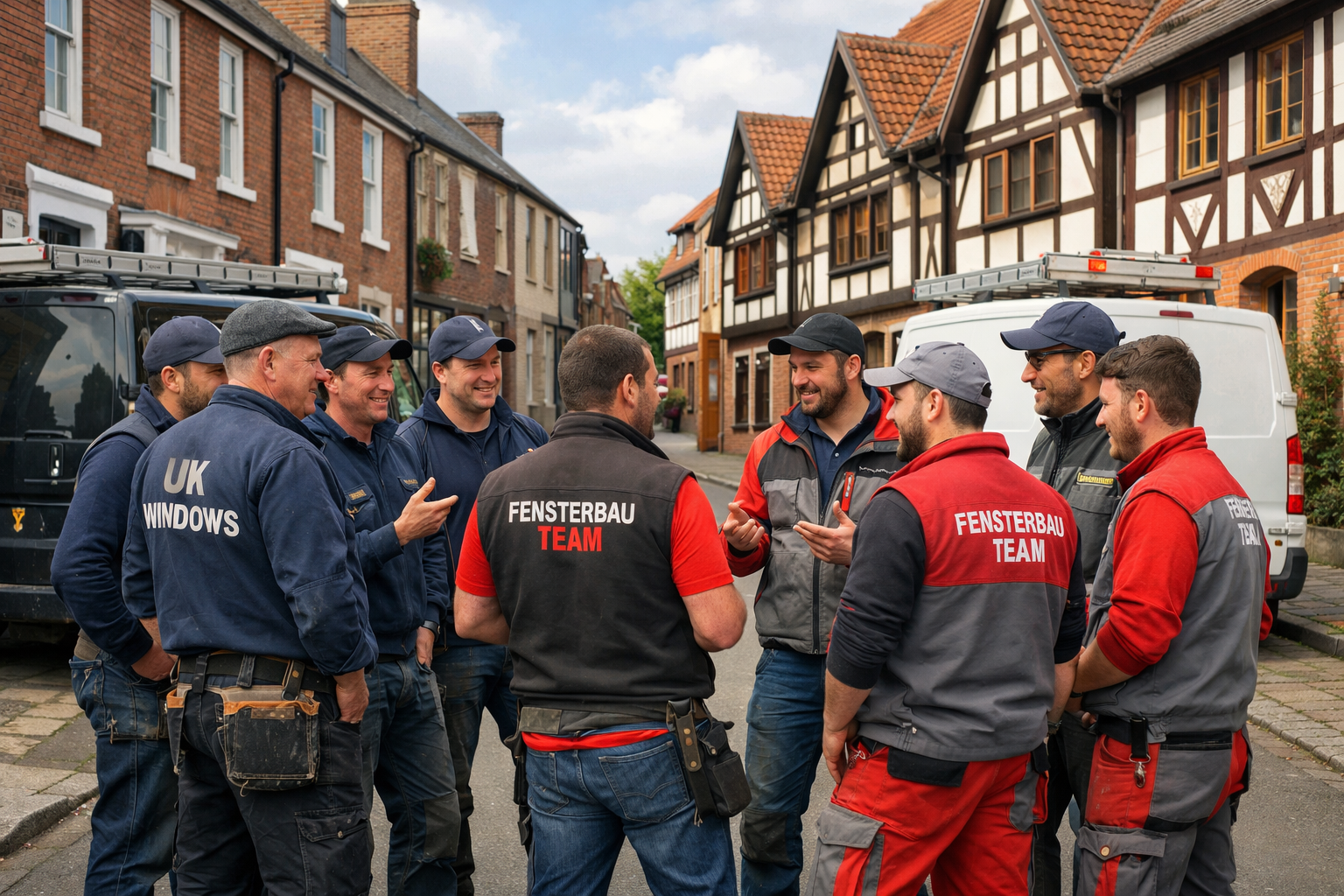

In most conversations about construction, Germany is held up as a model of stability. It is therefore striking that its window and door industry has spent the past three years learning how to live with decline. New-build volumes have fallen sharply, policy debates over heating technology have rattled homeowners and developers alike, and consumer confidence has wavered. Yet beneath the gloom, something more interesting has happened. A series of long-term shifts in regulation, sustainability and technology have started to redraw the competitive map – and they offer clear signals for the UK.
A new white paper, Learning From Germany – How UK window and door companies can turn renovation, sustainability and digitalisation into growth, argues that the German experience amounts to a preview of the challenges and opportunities that will confront British installers and fabricators over the rest of this decade.
The document identifies three trends that are already shaping German purchasing decisions and are increasingly visible in the UK.
The first is a decisive tilt towards renovation. As interest rates rose and new housing projects stalled, German demand for windows and doors did not disappear; it migrated from construction sites to existing streets. Replacement projects now account for the majority of the market and are driven less by fashion than by energy. Homeowners and landlords are responding to high utility bills and tightening regulation by upgrading the fabric of their buildings. Windows, once an afterthought, sit alongside insulation and heating as a core part of the investment case.
This shift has altered the role of the installer. Quoting a price for white PVC is no longer enough. Successful firms are those able to explain energy savings in kilowatt-hours, translate grant schemes into plain language and show how a new window will affect a property’s performance rating. The white paper suggests that British companies would be wise to follow suit. As the UK edges towards its own net-zero goals, the ability to talk confidently about payback periods and funding – without straying into regulated financial advice – is likely to become a commercial necessity.

The second trend is the rise of sustainability and design as real differentiators. In Germany, efficiency is now taken as a given. The competitive conversation has moved on to lifecycle impact, recycled content and end-of-life treatment. System houses highlight Environmental Product Declarations and recyclate percentages, and institutional clients have started to ask for documentation to match. At the same time, private owners are increasingly motivated by aesthetics. Dark matt frames, slim profiles and more assertive designs have become common across both PVC and aluminium ranges.
For UK manufacturers and installers, the message is twofold. One is that sustainability paperwork is not just bureaucracy; it can be the deciding factor in a tender. Those who can package their suppliers’ data into accessible, verifiable narratives will have an edge with housing associations, local authorities and commercial investors. The other is that homeowners buy with their eyes and their instincts. A credible design offer, supported by decent samples and visualisation tools, will make it easier to justify higher-performance specifications.
The third development is the spread of digital tools and smart technology into a sector that has historically relied on tape measures, faxed drawings and hand-written quotes. German consumers can now configure windows online, experiment with finishes and receive indicative prices in minutes. Many of these tools stop short of full e-commerce; they hand off to a local partner for survey and installation. But they have changed expectations around transparency and speed.
At the product level, automation has moved from luxury to default in several segments. Motorised shutters, sensor-controlled roof windows and smart-home integration are increasingly standard features, particularly in higher-end refurbishments. This has created new revenue streams for installers who are willing to train on controls and connectivity, and it has tied customers into longer service relationships.
The white paper is careful not to suggest that Germany’s model can simply be imported wholesale. Regulation, housing stock and consumer preferences differ. But it does highlight a common thread. In every area – renovation, sustainability and digitalisation – German companies that have prospered are those that have redefined their role. They see themselves less as commodity suppliers and more as partners in a broader transformation of the built environment.
The implications for the UK window and door sector are uncomfortable but ultimately encouraging. There is little sign of a rapid rebound in new-build volumes, and government policy on retrofit remains patchy. Yet there are clear steps that individual firms can take.
The white paper sets out a practical 12-month plan: audit the balance between new-build and retrofit; build simple, house-type-specific renovation packages; train staff to discuss energy performance; assemble sustainability documentation; launch basic online configurators; and introduce smart upgrade bundles. None of these moves requires a wholesale reinvention of the business. All of them require a conscious decision to look beyond the next order.
Perhaps the most striking conclusion is that growth is still possible in a broadly flat market. By focusing on renovation rather than waiting for a new-build revival, by treating sustainability as a specification tool rather than a slogan, and by investing in digital competence and smart products, UK firms can defend margins and capture new demand.
Germany’s experience is a reminder that structural change does not wait for perfect policy or perfect confidence. For British window and door companies, it is also an invitation. They can watch these trends wash across the North Sea at their own pace – or use the lessons set out in the new white paper to get ahead of them.
The white paper ‘Learning From Germany – How UK window and door companies can turn renovation, sustainability and digitalisation into growth’ will be available early in 2026.
Why This Matters: This white paper is not a definitive guide to success. It openly concedes that the German model cannot be imported wholesale. It should also be noted that the German market is not in the best of health. It is under pressure, as many other European countries are finding too. There are, equally, lessons Germany could learn from the UK. However, this paper sets out to focus on what the UK can learn from Germany. The authors may yet produce a companion report on what Germany can learn from the UK. The main lessons centre on delivering a more sophisticated message to homeowners, the growing role of sustainability, and the increasing importance of digitalisation across the supply chain.