

A new industry analysis suggests 2026 will be the year of the retrofit, while futuristic solar glass remains a luxury for the few. By Architecture & Construction Correspondent John Cowie
For developers and asset managers, the humble window has become a liability. With the UK’s Minimum Energy Efficiency Standards (MEES) tightening and global ESG mandates biting, the race to decarbonise the building envelope is no longer optional. A comprehensive new consultants’ report identifies ten innovations reshaping the global fenestration and glazing industry. Yet, for investors eyeing the next 12 to 18 months, the disparity between technical promise and commercial viability is stark.
The ‘Big Three’ for 2026
Of the ten innovations profiled, three stand out as immediately viable for the 2026–2027 cycle: Vacuum Insulated Glazing (VIG), AI-integrated systems, and advanced Low-E coatings. VIG is arguably the most critical technology for the UK and European market. Offering the thermal performance of triple glazing in a unit thin enough for historic sash windows, it is the “retrofitting hero” for the continent’s ageing building stock. However, viability is tempered by severe supply constraints. The report notes that installing VIG fabrication lines is capital-intensive, restricting production to major players like Guardian Glass and AGC. Consequently, buyers face price premiums of 10 to 15 per cent and longer lead times, making VIG a “buy” for high-value commercial retrofits but a “hold” for mass residential projects.
Similarly, the viability of AI-integrated smart systems is rated highly. Unlike hardware overhauls, software that links automated shading and dynamic glass to Building Management Systems (BMS) offers immediate ROI through energy savings. This digital layer is scalable and less exposed to the raw material volatility currently plaguing physical manufacturing. Meanwhile, advanced Low-E coatings have shifted from innovation to baseline necessity, becoming the unheralded workhorse of compliance.

The ‘Green Premium’ Barrier
The report’s analysis of smart and dynamic glazing, including electrochromic and thermochromic variants, presents a mixed outlook. While the technology has matured from “gimmick” to reliable building infrastructure, cost remains a formidable barrier. With initial investment costs significantly higher than standard glazing, mass adoption in the next 18 months will likely be limited to luxury offices and climate-conscious HQs rather than speculative mixed-use developments.
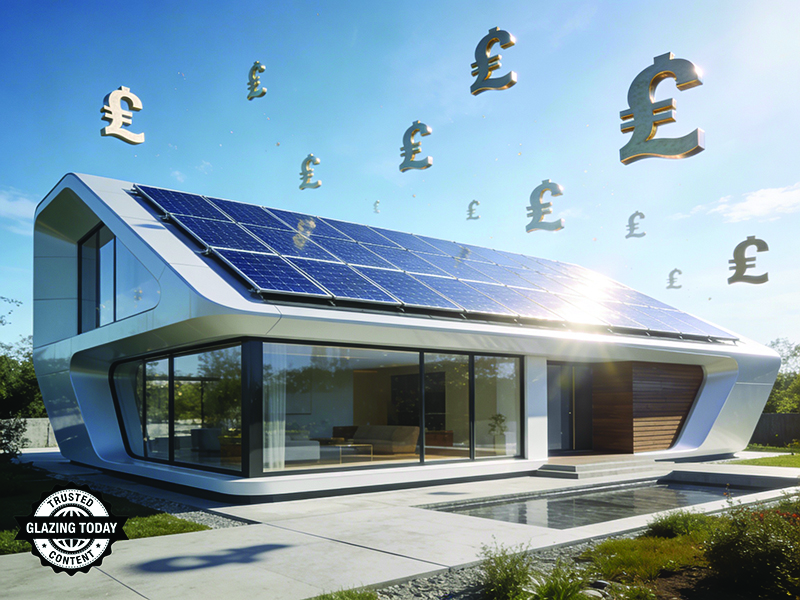
Furthermore, the dream of the “power-generating window”—using transparent solar films or photovoltaic glass—faces a harsh reality check. While technically feasible, the cost per watt remains two to four times that of standard solar modules, and the trade-off between transparency and efficiency has not yet been fully resolved. For the next 18 months, this remains a niche specification for “trophy” projects rather than a viable standard for general construction.
Supply Chain Fragility
Looming over the more futuristic innovations — including aerogel insulation, ultra-thin glass, and nano-coatings—is the fragility of the 2026 supply chain. The “just-in-time” model is buckling under the weight of geopolitical tensions and climate-induced logistics failures, such as recent port disruptions.
Moreover, the regulatory environment is hardening. The EU’s Carbon Border Adjustment Mechanism (CBAM) now demands rigorous carbon accounting for imported materials, adding administrative and financial costs to the supply chain. As noted in the report, high-tech innovations like aerogel rely on complex, global supply webs that are increasingly vulnerable to these disruptions. Conversely, pragmatic innovations like enhanced security glass and self-cleaning nano-coatings are seeing faster adoption, driven not by energy targets but by the immediate need for climate resilience against increasingly volatile weather.
The technology to deliver the net-zero façade exists. But for the next 18 months, the revolution will be uneven. The “smart money” will likely flow into technologies that solve the immediate retrofit crisis, specifically VIG and AI integration, while the more futuristic visions of solar skyscrapers and aerogel envelopes wait for the “green premium” to shatter.
Why This Matters: The research highlights the main barrier hindering many innovations: cost. It creates a vicious circle. Without widespread market adoption, economies of scale are never reached, preventing innovative problem-solving products from entering the mainstream. Breaking this cycle often requires manufacturers willing to operate at a loss for a sustained period, prioritizing long-term market development over immediate profit. As adoption grows and price ceases to be a barrier, both specifiers and end-users can focus on genuine performance benefits rather than initial outlay.
Vacuum glazing presents a more nuanced picture. Manufacturing costs are becoming increasingly competitive, particularly through economies of scale achieved in Chinese production. In an ideal scenario, vacuum glazing and solar-powered windows would command significant market share within the fenestration sector. However, the current global economic environment means few organizations possess sufficient capital reserves to absorb the transitional risk required for market-leading innovation.
For a copy of the report email the Glazing Today online team at: media@glazingtoday.com