

Hydrogen-powered furnaces could help redefine sustainability in the glazing and fenestration industry, as glass manufacturers seek lower-carbon ways to produce one of construction’s most widely used materials.
The move comes amid growing pressure on the construction sector to reduce emissions, with attention increasingly turning not only to how buildings perform once completed, but also to the environmental impact of the products used to build them.
Glass production is a highly energy-intensive process. Furnaces must reach extremely high temperatures to melt raw materials, and manufacturers have traditionally relied on natural gas or other fossil fuels to achieve this. The result is a significant carbon footprint before glass ever reaches a building site.
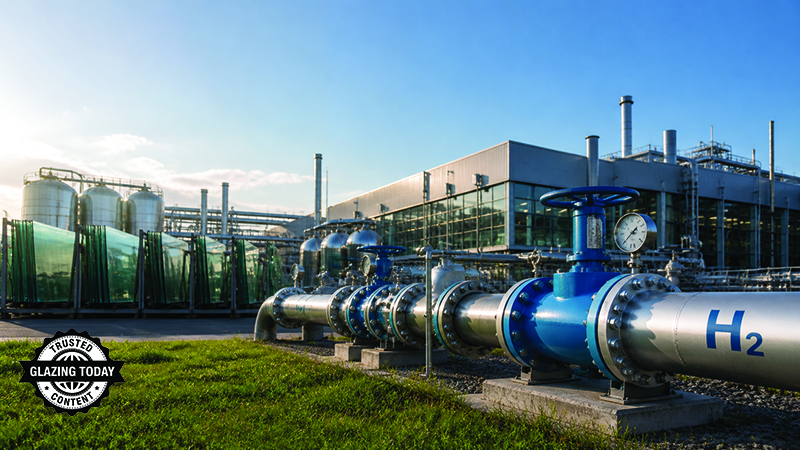
Recent trials using hydrogen-powered furnaces suggest one possible route to cutting those emissions. Unlike fossil fuels, hydrogen produces water vapour when burned, making it a cleaner option for high-temperature industrial processes.
Several European manufacturers are now testing hybrid systems that combine hydrogen with existing energy sources. This approach could allow companies to reduce emissions gradually, rather than replacing established furnace systems all at once.
However, the transition is complex. Technical challenges remain, including the need to maintain consistent flame characteristics and to adapt furnace designs so they can accommodate hydrogen safely and effectively.

There are also wider questions over the availability and cost of green hydrogen. For hydrogen to deliver meaningful environmental benefits, it must be produced using renewable energy. Without that, its overall carbon impact may be reduced rather than eliminated.
For the fenestration sector, the potential implications are significant. As building regulations evolve and sustainability targets become more ambitious, embodied carbon is becoming a more important factor in product specification. This includes emissions created during the production and transportation of materials, rather than only their performance in use.
Architects, developers and specifiers may therefore place greater value on lower-carbon glass when selecting products for projects aiming to meet net-zero or low-carbon standards.
Manufacturers investing in hydrogen technology and other low-emission production methods could gain a competitive advantage. As well as helping with compliance, they may be able to position themselves as leaders in sustainable innovation in a market that is placing increasing emphasis on environmental responsibility.
The shift could also affect the wider supply chain. Fabricators and installers may face growing demand for transparency around the origins and environmental credentials of the glass products they supply. Certification schemes and carbon reporting are likely to become more prominent as clients and regulators seek reliable data.
Hydrogen is unlikely to replace traditional fuels across the industry overnight. But its development represents an important step in efforts to decarbonise one of construction’s most important materials.
For glazing, the future may depend not only on how glass performs in buildings, but on how sustainably it is made before it arrives on site.