


Intelligence
INTELLIGENCE: Glass market poised for transformative growth amid sustainability and regulatory shifts

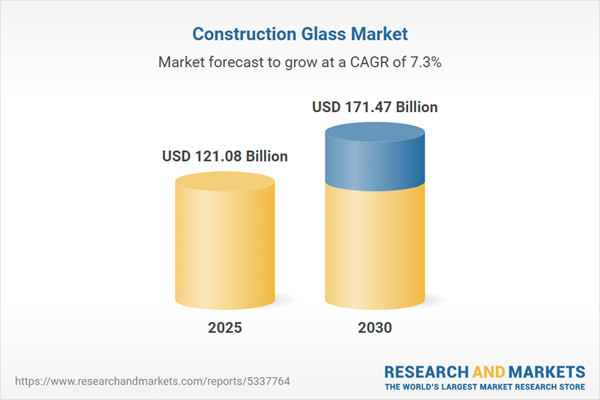
The global construction glass market is undergoing a decisive transformation, shaped by the dual imperatives of sustainable development and technological innovation. From USD 112.59 billion in 2024, the market is projected to expand to USD 121.08 billion in 2025, with sustained growth at a compound annual rate of 7.26% expected to propel it to USD 171.47 billion by 2030. At the heart of this evolution lies a redefinition of glass from a passive structural component to a sophisticated, performance-enhancing material integral to modern architecture.
As the demand for energy efficiency, occupant wellness, and architectural versatility intensifies, construction glass is evolving rapidly. Enhanced by treatments such as low-emissivity coatings and smart electrochromic systems, contemporary glazing now actively contributes to building performance. Simultaneously, the sector is navigating a challenging policy and trade environment, with the 2025 U.S. tariff landscape emerging as a critical inflection point for global supply chains and sourcing strategies.
Sustainability and Innovation at the Forefront
Rising energy costs and regulatory pressures have triggered a profound reassessment of building envelope requirements. Glass technologies that reduce thermal loads—ranging from triple-glazed units to solar-responsive coatings—are gaining ground across commercial and residential segments. Moreover, smart glass applications once confined to flagship projects are finding broader acceptance, heralding a shift in mainstream construction practices.
Health and safety considerations, amplified in the wake of the pandemic, are driving demand for antimicrobial finishes and precision-sealed glazing units. Meanwhile, manufacturing is being reshaped by digital fabrication and automation, supporting scalable customisation and reduced waste. This technological pivot is also fostering a competitive edge for firms investing in circular processes and localised production.
Tariff Disruptions Trigger Supply Chain Realignment
The imposition of higher U.S. tariffs in 2025 on key inputs such as borosilicate, aluminosilicate, and coated glass has forced stakeholders to recalibrate procurement strategies. Faced with rising costs, many have turned to domestic production, spurring expansion and modernisation of U.S.-based facilities. This trend is also fuelling innovation in cullet utilisation and driving closer integration between producers and raw material suppliers.
Trade realignments are already underway, with North American buyers diversifying toward Latin American partners and select intra-regional agreements. European and Asian exporters are similarly recalibrating, shifting focus toward emerging economies. The result is a more interconnected but operationally complex supply environment, placing a premium on transparency and logistical agility.

Market Segmentation: Complexity and Opportunity
Material segmentation reveals the dominance of soda lime glass, bolstered by a growing emphasis on recycled content. Specialized materials such as borosilicate and lead glass retain their niches in high-performance and technical applications. On the product front, coated and laminated glasses are gaining momentum as design and efficiency priorities converge.
Distribution patterns continue to blend traditional and digital channels, with e-commerce platforms making inroads particularly among smaller-scale projects. Applications are diversifying beyond façades and windows to include interior partitions, furniture, and smart fixtures—each demanding precise performance attributes. Process technologies such as tempering, laminating, and chemical coatings remain central to ensuring product reliability and compliance.
Regional Outlook: Divergent Growth Drivers
Regional disparities remain pronounced. The Americas are led by the U.S., where green building codes are accelerating low-emissivity and insulating glass adoption. Canada and Mexico exhibit similar trajectories, albeit at different scales. Europe’s push toward carbon neutrality is catalysing adoption of high-performance triple-glazed units, while the Middle East focuses on signature structural glass façades. In Africa, cost-effective insulating solutions dominate due to climatic and economic considerations.
Asia-Pacific continues to be the engine of volume growth, with China’s real estate and India’s commercial expansion underpinning demand. Trade agreements across Southeast Asia are further enabling the flow of value-added glass solutions, reflecting growing regional integration.
Industry Leadership and Competitive Dynamics
Market leaders—ranging from global conglomerates to agile mid-sized firms—are investing in R&D, digital manufacturing, and customer experience platforms. Innovations in surface treatments and process optimisation are enabling firms to align products with evolving design and regulatory standards. Consolidation through mergers and acquisitions is creating vertically integrated entities, capable of delivering end-to-end value.
Looking forward, digital tools such as virtual reality and predictive maintenance systems are poised to enhance design collaboration and operational efficiency. These developments are not only improving quality assurance but also redefining the relationship between producers and end users.
Strategic Pathways for Industry Stakeholders
To remain competitive, industry players must focus on developing advanced coatings and responsive glass technologies. Strategic sourcing, particularly through increased cullet use and local partnerships, can mitigate geopolitical and cost-related risks. Direct engagement with the construction sector and investment in data-driven planning will also be critical.
Furthermore, proactive regulatory engagement and membership in industry forums can offer influence over forthcoming standards. Emphasising capital efficiency and margin optimisation—particularly in specialty glass segments—will be essential to navigate cyclical fluctuations and reinforce long-term profitability.
Methodological Rigor Underpinning the Analysis
The insights presented are grounded in a robust research methodology that integrates executive interviews, industry publications, and economic data. Cross-validation and expert reviews ensure data integrity, while segmentation and regional analysis are benchmarked against market indicators to ensure consistency and relevance.
What this matters: The construction glass market stands on the cusp of a new era—one defined by environmental responsibility, technological sophistication, and strategic adaptability. As companies recalibrate to accommodate tariff shifts, regional demands, and evolving customer expectations, those that invest in innovation, resilience, and stakeholder collaboration will be best positioned to capture long-term value. The challenge ahead lies not just in scaling production, but in shaping a transparent, sustainable, and digitally enabled industry fit for the demands of the future built environment.