

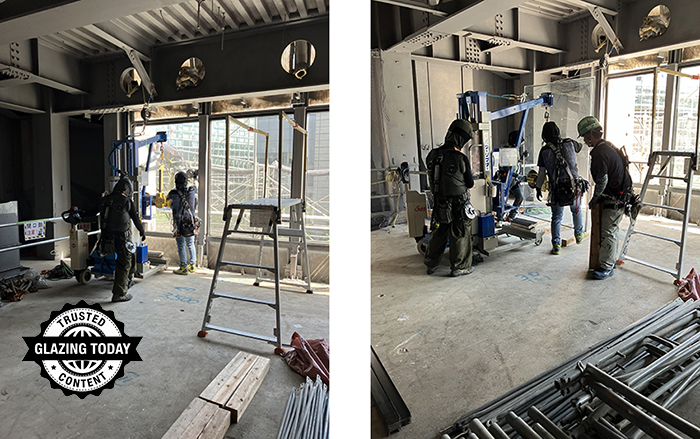

AGC, one of the world’s largest glass manufacturers, has joined forces with Obayashi Corporation and MUFG Bank to launch what is believed to be Japan’s first scheme to recycle waste window glass from a demolition site directly into new float glass.
The project uses glass removed during the demolition of MUFG Bank’s former head office in Chiyoda-ku, Tokyo, a 120,000 square metre building. Instead of being sent for lower grade uses such as glass wool or patterned glass, the waste glass is being processed into cullet and shipped to AGC’s Kashima plant in Ibaraki Prefecture, where it is fed into the float process to produce clear architectural glass fit for use in new buildings, including future Obayashi developments.
According to figures released by the companies, 149 metric tons of window glass were recovered from the demolition, with 81 tons channelled into the closed loop process for flat glass production. The initiative is estimated to have cut CO2 emissions by 49 metric tons.
Obayashi has already run similar closed loop schemes for structural steel and aluminium recovered from demolition sites, and the company said it wanted to extend the same thinking to glass as part of its Sustainability Vision 2050. AGC said the project fits within its “Blue planet” commitment to resource efficiency, while MUFG Bank, which is rebuilding its headquarters with completion due in 2030, said the work supports its wider carbon neutrality targets.
Until now, recycled window glass has typically been downgraded into lower specification products rather than reused as high quality float glass, which demands stricter raw material standards. The companies say expanding this approach could open up new recycling routes across the architectural glass sector more broadly.
Why This Matters: For the UK fenestration sector, still grappling with the practical and financial challenges of decarbonising window and IGU production, this Japanese pilot offers a working template. Closed loop glass recycling from demolition waste, rather than downcycling, could meaningfully reduce embodied carbon in new builds, a growing concern as whole-life carbon reporting gains traction under evolving building standards. With UK fabricators and systems houses under pressure to demonstrate sustainability credentials, this model deserves close attention from GGF members and specifiers alike.