

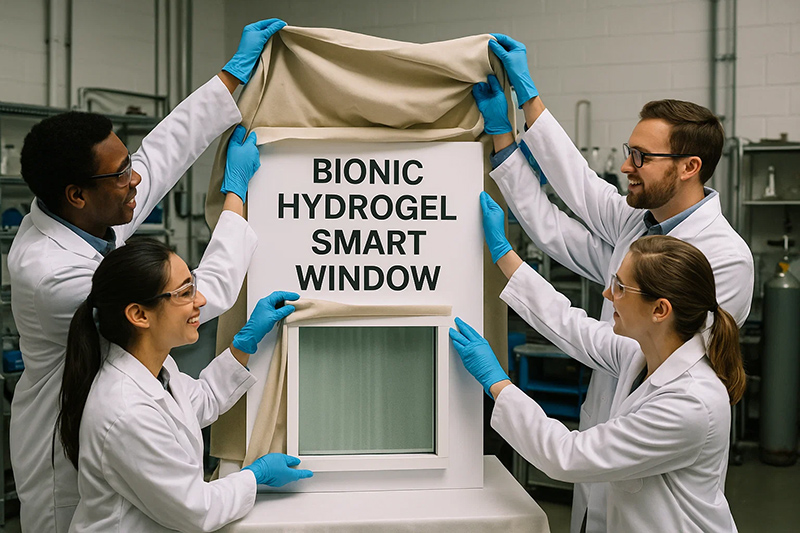

Transparent hydrogel composites may soon redefine energy efficiency in modern architecture after researchers at South China University of Technology reported a breakthrough smart window capable of cooling indoor spaces by up to 22 °C over a sustained period while simultaneously collecting waste heat for reuse. The novel system combines high visible-light transmittance of 92 per cent with strong ultraviolet blocking and near-infrared insulation, attributes that address the long-standing trade-off between transparency and thermal performance in glazing. Designed around a bionic hydrogel infused with nanoporous silica, the glazing layer not only reduces heat gain but also integrates temperature-sensitive sensing, potentially paving the way for windows that autonomously adapt to changing environmental conditions.
In trials lasting 168 hours, the hydrogel maintained record-setting insulation performance equivalent to an 11 °C temperature differential under continuous solar exposure, while channelled heat was directed to micro-fluidic circuits for storage and later repurposing, such as domestic water heating or power generation. The authors envisage applications spanning residential high-rises to industrial facilities, where the dual functions of cooling and energy recapture could yield substantial reductions in carbon footprints. Challenges remain in scaling the synthesis process and ensuring long-term durability, but industry observers say the technology has the potential to accelerate the shift towards smart, sustainable façades in commercial developments.
Why this matters: The use of windows for cooling and heating of buildings is the obvious solution in the modern world. The development of systems has been slow and often too expensive for commercial roll-out. The Chinese are ahead of the game in so many linked areas and this latest development is a key moment. There is hope their expertise with be shared globally and this innovation will make it to the mass market. Solar energy is the best modern day example of how collaboration can lead to a global roll-out.